By Anne-Marie Jones
The 60’s was an interesting time, especially for women. The birth control pill was new, skirts were getting shorter, and women were beginning to feel more liberated.
Makeup started to get more modern and experimental, with bold colours becoming more widely available.
Models like Twiggy, Jean Shrimpton and Edie Sedgwick defined the decade, and the ‘Youthquake’ movement was coined by Diana Vreeland, the editor-in-chief of Vogue.
Eyes –
Eyes were a strong focus of the look, drama was key! These were some of the features:
Dramatic eyeliner: Thick black liquid eyeliner with a bold wing or “cat eye” look.
Crease definition: Dark eyeshadow drawn in the crease (often without blending) to create a wide-eyed, doll-like effect.
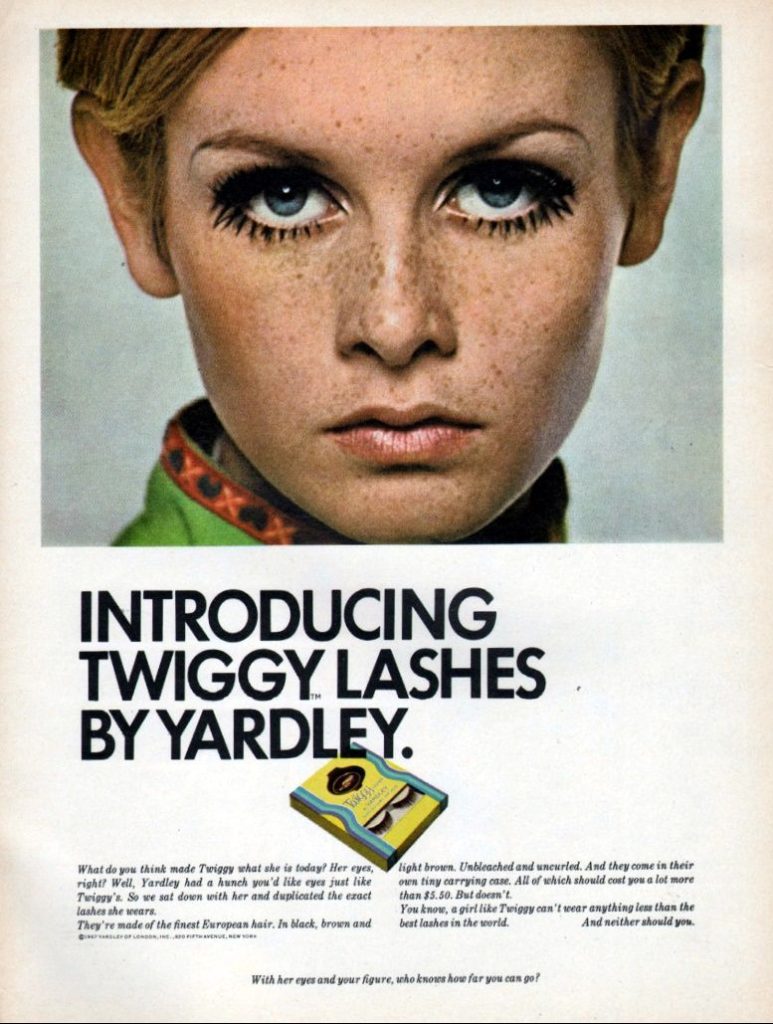
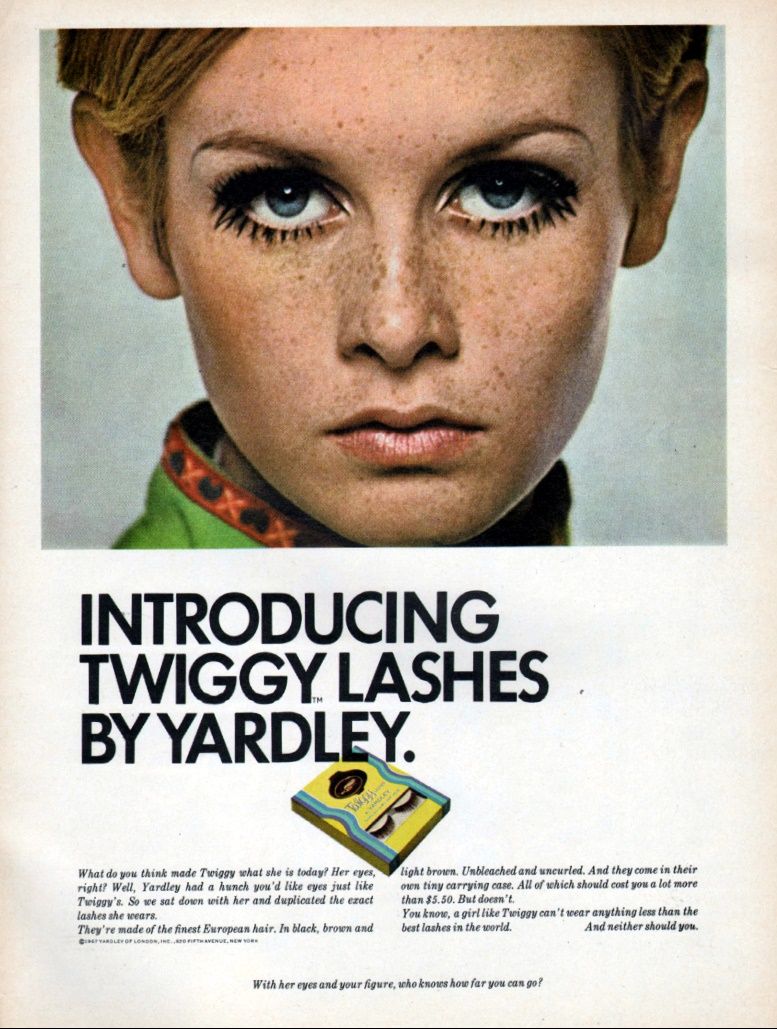
Twiggy lashes: Long, spidery, clumpy mascara—sometimes even false lower lashes painted on with eyeliner. Maybelline’s ‘cake mascara’ was popular, this was a solid block applied with a brush, during the 60’s Maybelline invented the ‘Ultra Lash’, the modern version of the mascara as we know it today.
White eyeliner & eyeshadow: Used to make eyes look wider and brighter, or to create dramatic, fun effects.
Face –
The face was kept simple and light, to keep the attention on the eyes. A pale, matte complexion, with powder used to remove shine, was a popular look.
CoverGirl launched ‘Clean Makeup’ in 1961, one of the first “fresh and natural” liquid foundations marketed to teens.
Lips –
Nude or pale pink lips were hugely popular to keep the focus on the eyes. Occasionally, women wore coral or orange-red lipsticks, especially early in the decade.
Frosted and pearly lipsticks (especially light pink or peach) were a late ’60s trend. ‘Pink Lightning’ by Revlon was created in the 40’s but was still popular in the 60’s.
Nails –
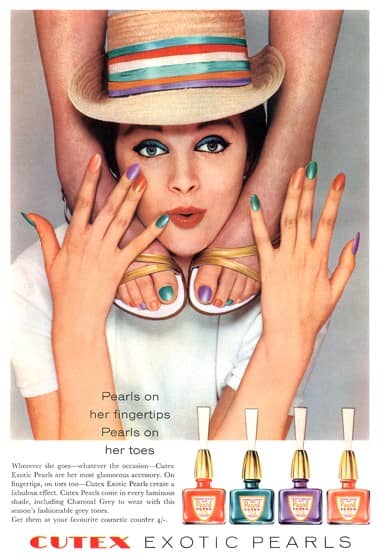
Nails weren’t a big part of the 60’s makeup look but brands like Cutex were starting to introduce bolder, brighter, funner colours
Late 60’s, the Rise of the Hippie –
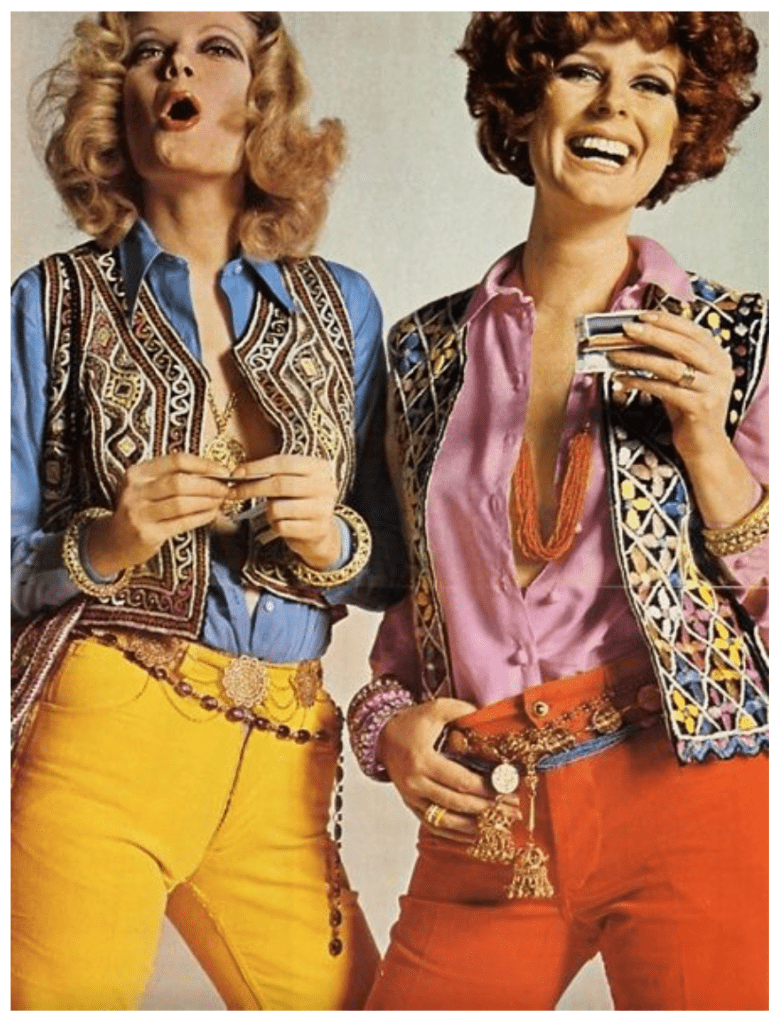
Towards the end of the 60’s, there was a shift towards earthy, natural tones with softer eyes and more natural skin. Minimal makeup, sometimes with gloss or balm instead of lipstick.
Some of the popular brands were the same as today, here are a few of the most commonly used:
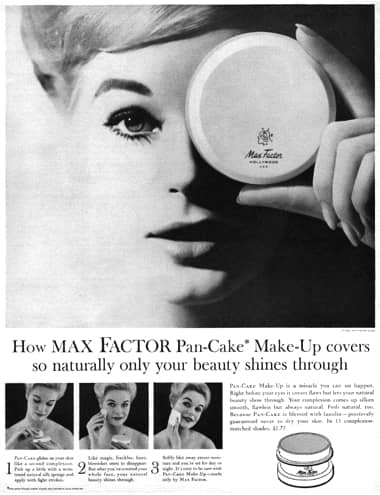
Max Factor – Hugely influential, especially in Hollywood; their mascaras and foundation were very popular. Their ‘pan-cake’ makeup was an essential part of the Golden Age of Hollywood. Max Factor makeup is no longer distributed in the USA, but can still be found in some countries including New Zealand.
Revlon – Known for bold lipsticks, nail polish, and their “Fire & Ice” range (including perfume). Revlon are still going strong!
Maybelline – Affordable mascaras and eyeliners; their cake mascara (in a little compact with a brush) was a must-have before the 60’s , until the revolutionary Ultra Lash was invented by Maybelline.
Elizabeth Arden – Probably more popular with older audiences now, but in the 60’s they were at a peak, their Rolling Mirror Lipstick was very innovative.
Yardley of London – Famous in the Swinging London scene, especially for their eye makeup products and their partnership with Twiggy.
Avon – Popular through door-to-door sales, offering lipsticks, compacts, and fragrance.
CoverGirl – Launched in 1961 as a more accessible line from Noxzema; became popular for its fresh, “girl next door” look.
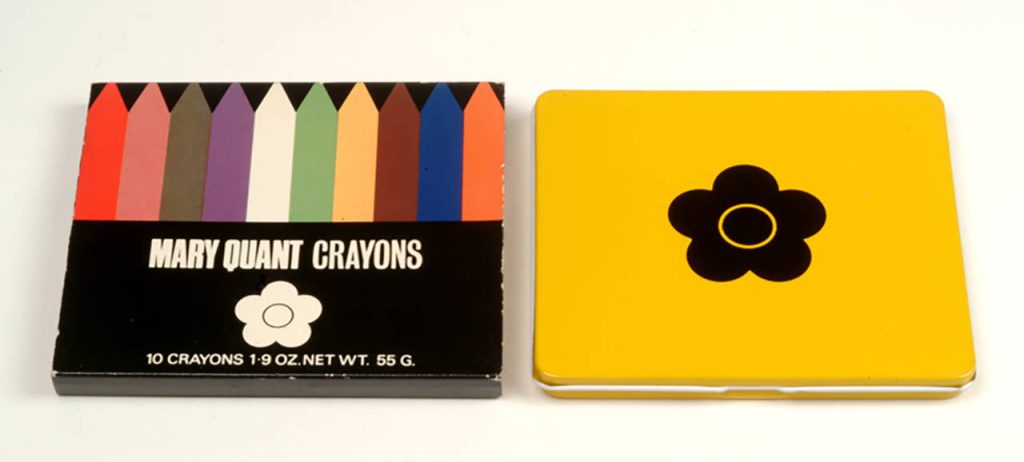
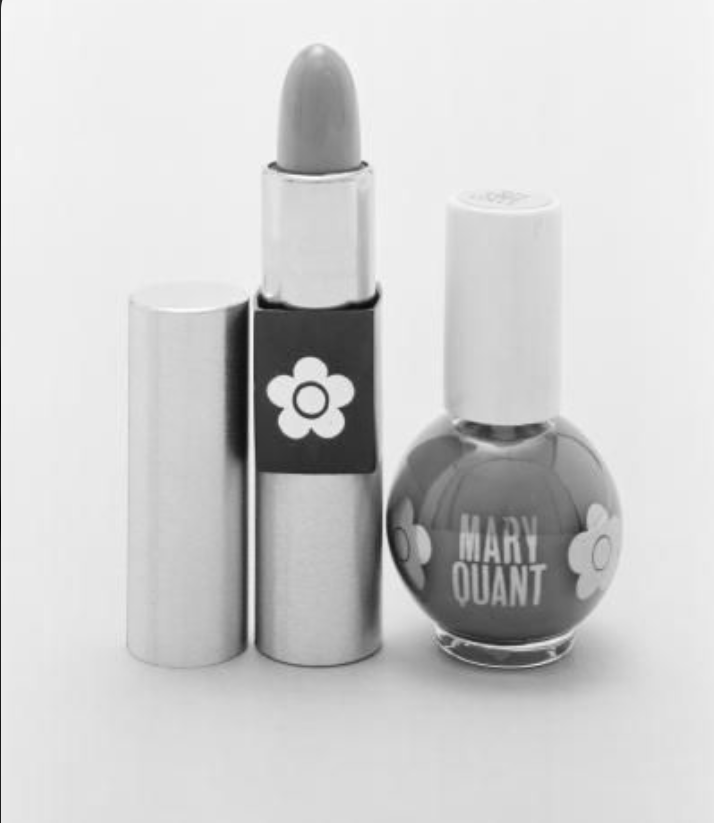
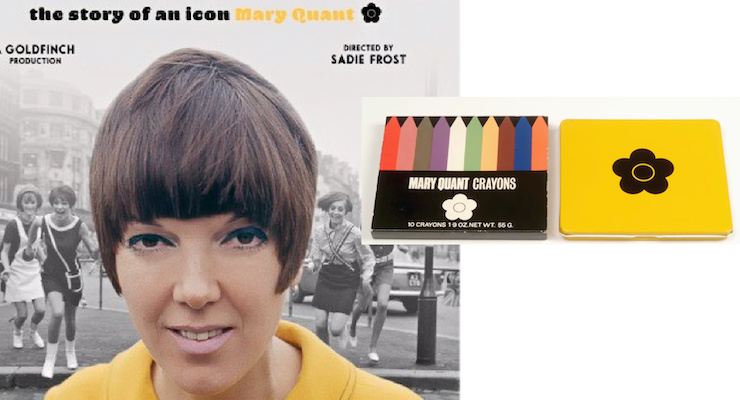
Mary Quant – More fashion brand than traditional cosmetic line, but she launched makeup in London that captured the Mod aesthetic. Mary Quant is often mis-credited as inventing the mini-skirt, but she definitely helped make it popular. Mary Quant makeup has a limited market these days and is mostly found in Japan.
The key to getting an undeniably 60’s look is: heavy eye makeup (liner, false lashes, pale eyeshadow) + light lips (nude, pale pink, orange or frosted) + matte skin.