
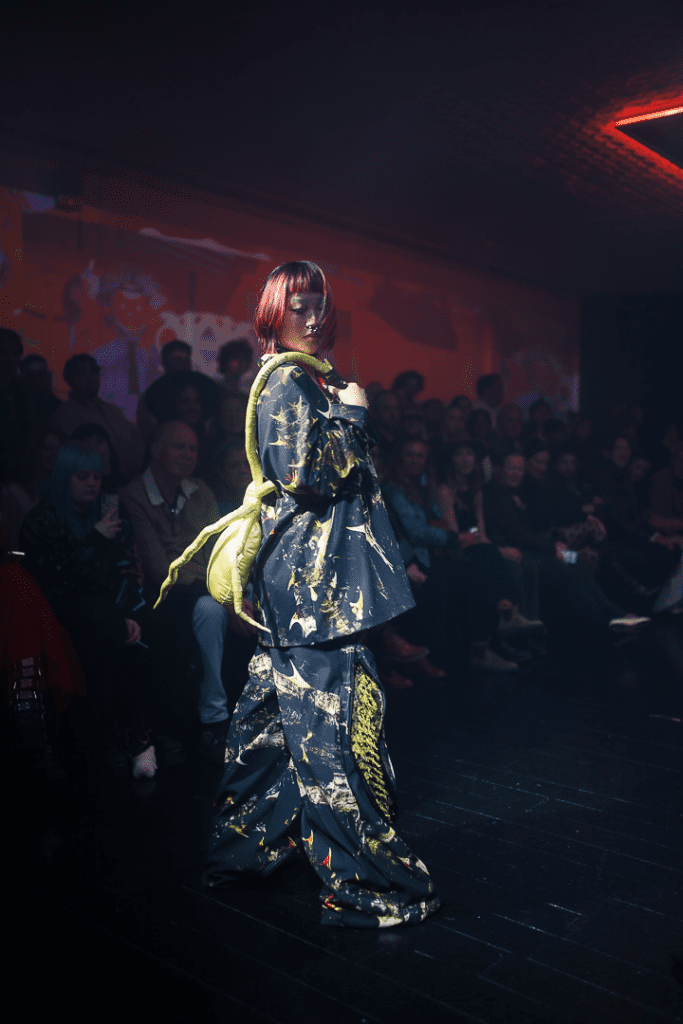
Sans Pareil Online spoke to designers Caden Larsen and MADEBYV about the latest project Awe māpara, for Ahua, for which MadebyV collaborated with her signature fabric bag style, while Caden produces the fabrics and prints.
Caden says:
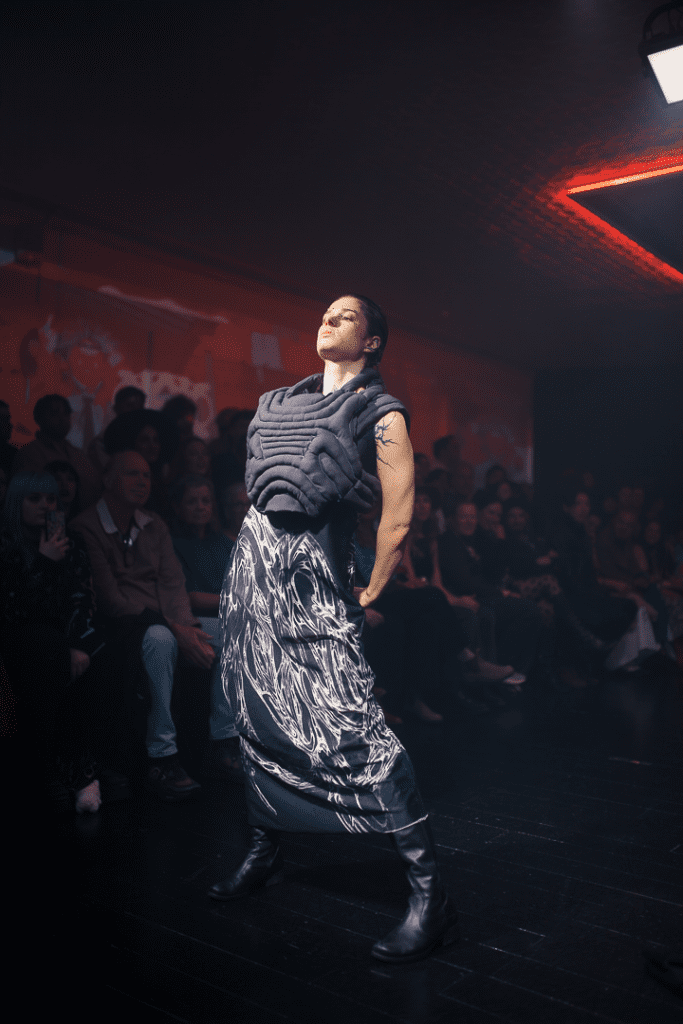
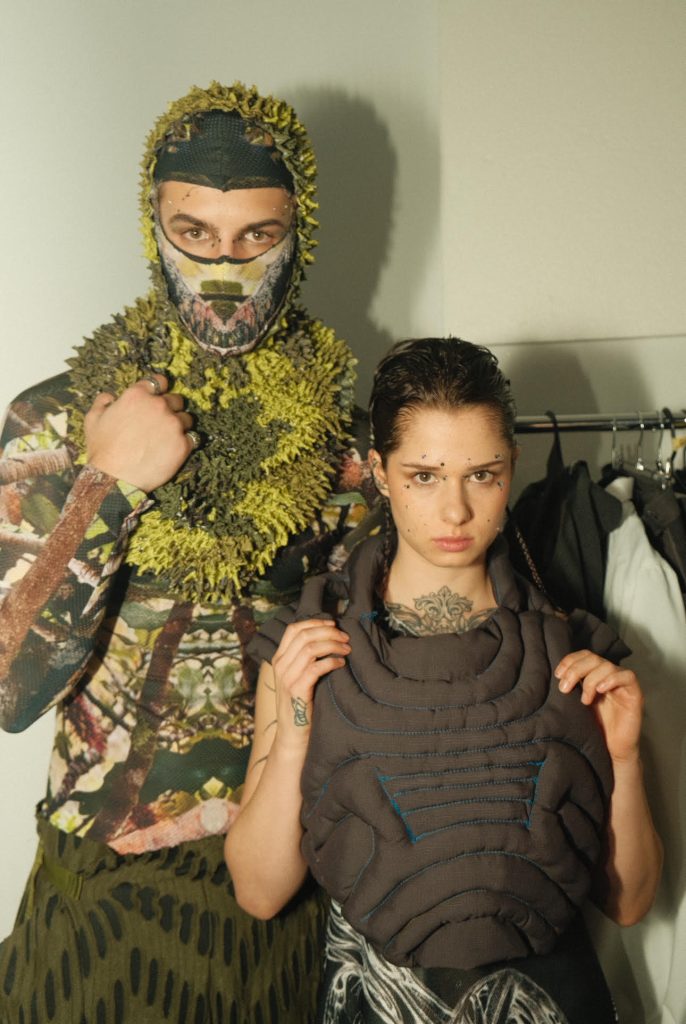
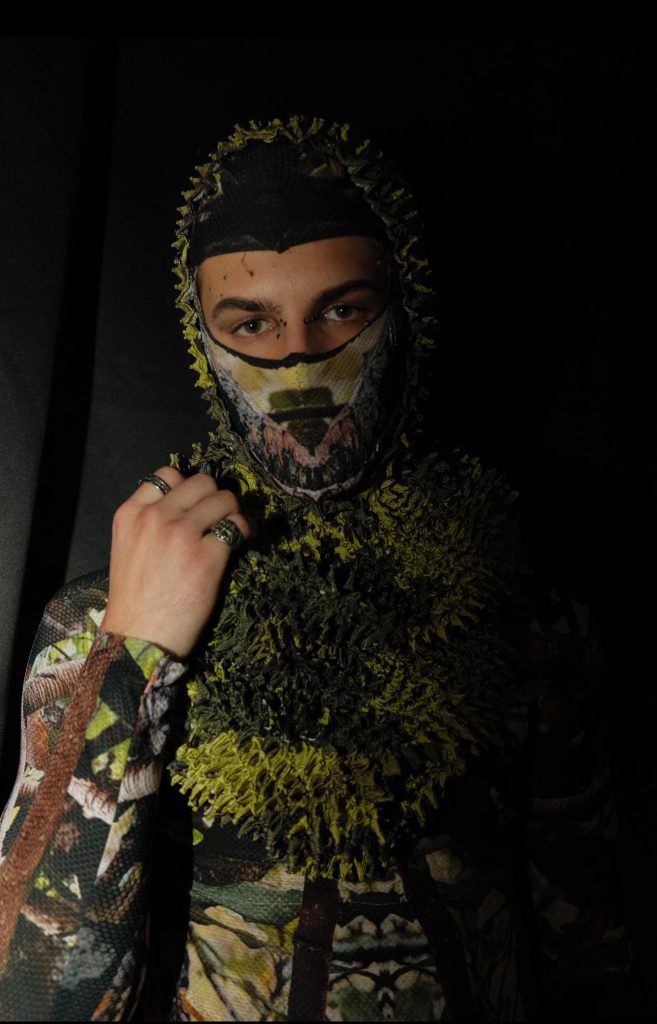
‘Awe māpara’, or ‘camouflage’, is a natural phenomenon intricately formed by our Ngahere (native forest). ‘Awe māpara’ explores how the future camouflage of our Ngahere looks, biodiversity and the evolution of the creatures that inhabit this space. It is not simply a visual disguise, but a deeply interconnected system, where countless individual elements (plants, animals, fungi, and microorganisms) collaborate in harmony. These components, while unique in form and function, come together to create a distinct and recognisable motif that emerges organically through their coexistence.
This motif is more than just aesthetic; it speaks to the living, breathing relationship within the ecosystem. Each leaf, branch, bird, and insect contributes to a larger narrative of concealment, adaptation, and survival. The way a Kererū’s plumage blends into the mottled forest floor, or how lichen mimics the bark of ancient Kauri, these are expressions of Awe māpara in its natural habitat. It is the embodiment of unity through diversity, where the forest becomes both background and participant in the lives of its inhabitants. In its natural form Awe māpara morphs into its surroundings, bonding the interwoven connection between form and function. But when subjected to an urban environment, Awe māpara becomes a tool to stand out and stimulate the audience, juxtaposing the monochrome landscape, and challenging the viewer to question the true purpose of camouflage.
Underpinning this concept is the idea of ‘Kaihanga O Tutu’, to distract, to obstruct, to visually cancel. Creating moments of stimulating discourse to attract the attention of the audience through vibrant colour and patterns found in the Waitakare Ranges. This concept is Vandal and Hounds creative direction.
Abstract for creative thinking about the connection to tailors and model that helped make this possible:
Rooted in the idea of camouflage formed by our Ngahere, the collection explores how individuality can merge into a unified, living pattern, just as diverse species in the forest contribute to a greater ecological design.
From the dappled canopies to the mycelial networks beneath the forest floor, the Waitākere Ranges are a living system defined by interconnection. Within this thriving native ngahere, camouflage, ‘Awe māpara’ is not a surface level tactic, but a philosophy of survival, transformation, and coexistence. Inspired by this natural phenomenon, a collective of nine tailors has come together to explore camouflage not only as concealment, but as creative collaboration.
Each tailor in this project embodies a unique element of the ngahere’s ecosystem. Like the distinct flora and fauna that form the forest’s complex web, their approaches are rooted in individuality, shaped by differing techniques, materials, worldviews, and relationships with the land. Yet, when brought together, their creations speak with a single voice: one of adaptation, connection, and creativity. Just as the tailors are importing to this collection, this project isn’t possible without a diverse selection of models that embody the unique traits found in our Ngahere.
In the same way the forest thrives through biodiversity, this collection finds its full expression through a cast of individuals who each bring their own mana, movement, and mauri to the work. These models are not simply wearers of garments, they are active participants in the living narrative of Awe māpara. Each person reflects the variety, strength, and subtle beauty of the ecosystem we are drawing from. The bold resilience of the tōtara, the quiet strength of the punga, the adapting resilience of the pūriri moth, and the grounding presence of the earth itself.
Their bodies carry the story of adaptation and expression. Their presence challenges singular ideals of beauty and identity, offering instead a rich tapestry of forms, tones, gestures, and energies. As with the ngahere, no two are the same, and that difference is not only welcomed, but celebrated.
According to Veritty Chaplin of MadebyV;
We both are born in bred in west Auckland, and both connect with nature and the Waitakere Ranges. So we understand each other quire well socially and creatively. We have worked together collaboratively for a couple of years releasing projects hear and there where I make the bags and he supplies the fabrics, prints and particular materials.
We bounced ideas of each other, but this project was definitely more his vision than mine. There were also several other collaborators involved, including, Wrath Simons, Repairing Angels World, James Taylor, Ari Takes Over, Dam Creative, Nid, and Thanushi Mārage.
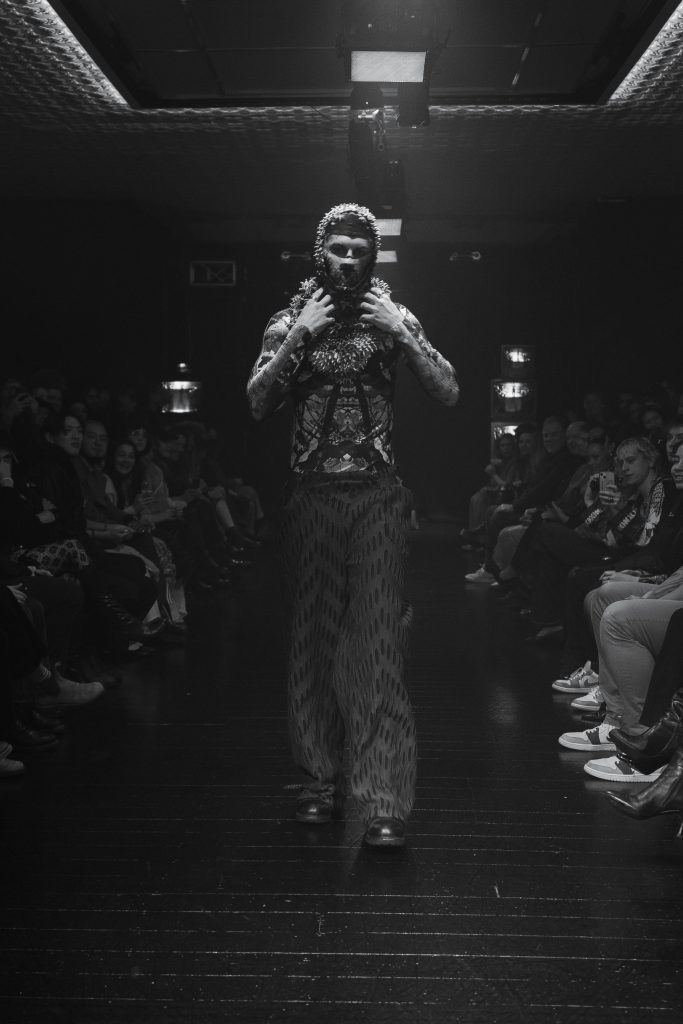
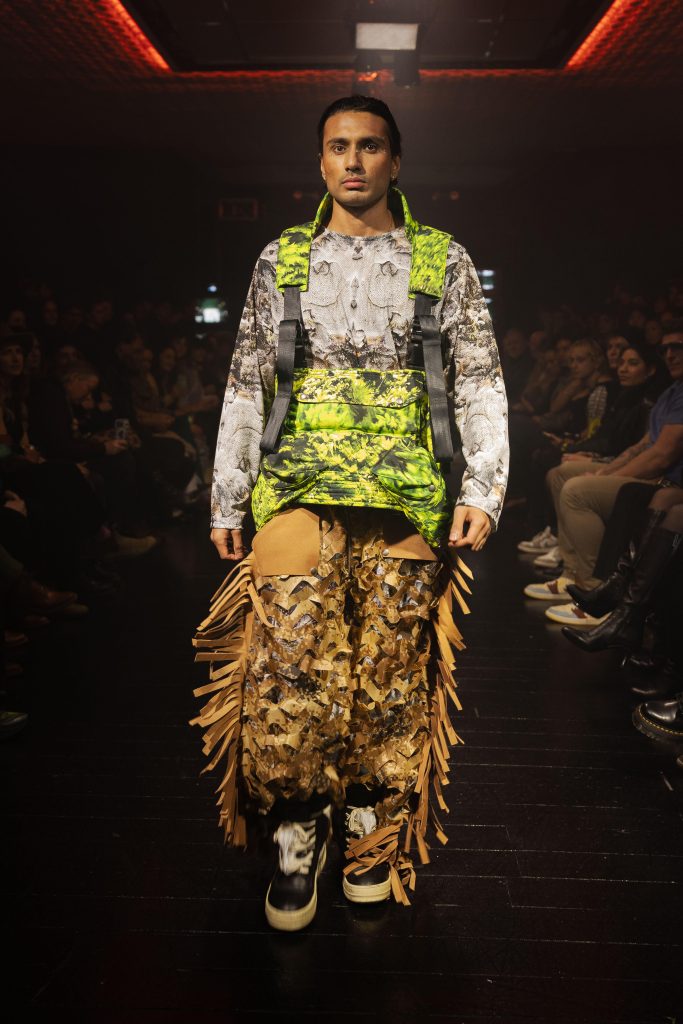
Images By Aliyah Edwards

Images by Natalie Jane
Images by Sarah Doss
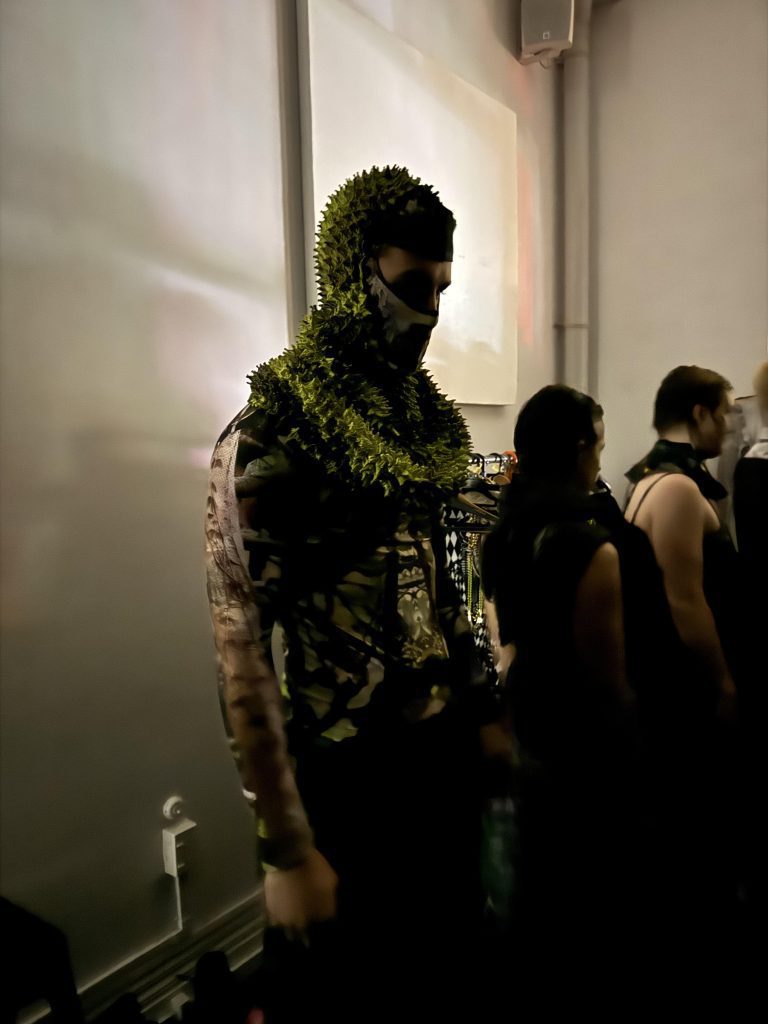
Image By Caden Larsen (Vandal and Hound)
Find Caden on Instagram – Vandal and Hound