NEAT is one of the fastest grown products based businesses in New Zealand. We got to chat with co-founder Abby Packer about what makes Neat such a success.
SP: You started Neat back in 2016, from a room in your house. What was the spark or realisation that led you to do that?
I was in a career limbo at the same time my mother was trying to find a natural fragrances he actually liked. She couldn’t find anything locally, and you couldn’t sample products outside of New Plymouth, so I offered to make her one using some essential oils I already had. I was quite surprised that the scent turned out to be one that people liked (not for Mum, she was harder to please), but everyone else thought it was great.When the other plans I had in motion kept hitting roadblocks, I chose to pivot. I set up a website, launched two fragrances that smelled good, and included the option to purchase samples, knowing this approach would make fragrance more accessible and less risky to try. That simple decision to make fragrance sampling more accessible became the foundation and heart of Neat.
SP: What were the trickiest (and maybe even surprising!) parts of crafting natural ingredient combos that still pack a serious performance punch?
One of the more complex challenges of working with natural formulations is the unpredictability of natural ingredients supply chains.They’re seasonal, variable and sometimes discontinued or become impossible to source. When a core ingredient disappears from the market, it’s not as simple as substituting in another ingredient, as there might be with synthetics; doing so completely changes the scent profile. We experienced this with our most-loved original scent,Sweet Child. Unfortunately, we couldn’t replace one of the key ingredients, so we had no choice but to discontinue it.


SP: Sustainability is often more than just natural ingredients. How do you consider packaging, manufacturing waste, and end-of-life for your products?
Sustainability is woven through every part of our business. It goes far beyond using natural ingredients; it’s about how we operate, who we work with, and the standards we expect from every supplier in our chain. We’re firm on what we need, and while not every supplier gets it right every time, we remain consistent and clear on our standards.When we receive materials, we ask for packaging that is as low-waste and earth-friendly as possible, with no plastic. Some suppliers prefer plastic because it reduces the risk of damage, but I would much rather have us receive a slightly scuffed bottle than send a pile of plastic to landfill.
Today was a good example-I had to send a not-so-positive email to a supplier because an ingredient arrived in an unnecessarily large container, creating avoidable waste. While I don’t always need to have these conversations, we’re comfortable being consistent and clear about our expectations. End-of-life packaging is a key focus for us, and we are continually looking to refine it.Our bottles are made of glass, and while we would like to offer refills for every product, it’s more complex than it appears. If a bottle isn’t properly cleaned at home between uses, there’s a real risk of contaminating the fresh product. Additionally, some of our formulations are difficult to decant cleanly. Then it becomes an issue for the consumer rather than a solution, and all these factors are important for us to consider. We conduct on going testing because we prefer to progress slowly and thoughtfully rather than introduce a system that creates new problems. Operationally, we run very efficiently. We use very little water, generate minimal waste for our size,and ensure all our containers are washed and sent to our local recycling facility for reuse within the community. All our cardboard is either repurposed into packaging for customer orders or sent for recycling. It’s an ongoing process of improvement, but we approach it with purpose and integrity at every step.
SP: What role do you see NZ based brands playing in shifting global consumer expectations around ethical, sustainable beauty?
New Zealand brands are already leading in several areas, particularly when it comes to circular packaging and thoughtful sustainability initiatives.There’s a real strength here in creating products with intention rather than excess, and that sets a strong example globally.However,there needs to be a conversation that asks why the beauty industry often relies on launching new products to keep people interested,and returning to buy something new; this cycle doesn’t support genuine sustainability. Many brands present sustainable packaging, but the broader business practices behind the scenes don’t necessarily reflect sustainability in a meaningful way. For ethical beauty to be truly ethical, you need to look beyond the product itself. It requires brands to consider how they operate, what they create, and why they create it–not just how it’s packaged and marketed.
SP: On a personal level, what keeps you motivated when the entrepreneurial journey gets tough?
My husband and our dog-and knowing that what we do genuinely makes a difference in people’s lives. We’re fortunate to have built a brand with products that reach so many people, and while fragrance isn’t a miracle product, it does create moments and memories that matter to people.Our skincare range can support those who have struggled with particular concerns,and our magnesium range can make a real difference to mobility issues or discomfort. Those things sound small, but for the person experiencing them, they’re anything but.When someone tells us that their confidence has returned or that a part of their daily life has improved because of something we have made, that’s what keeps me going on the tougher days.It reminds me why we do this.


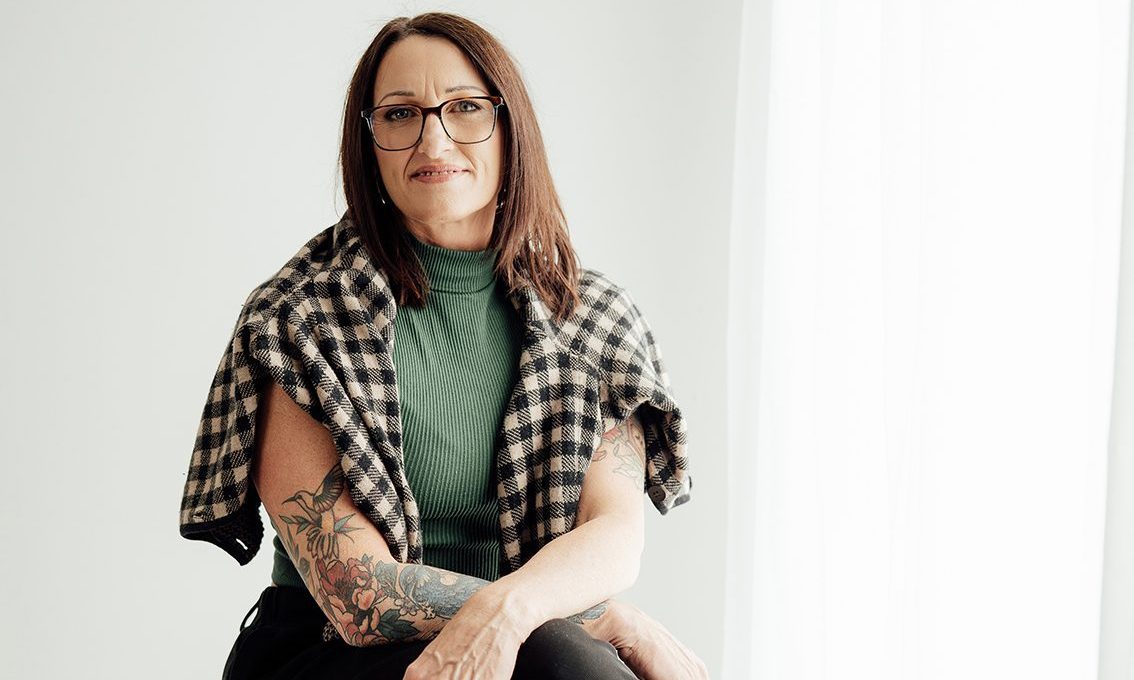
Pictured: Abby Packer.
SP: Can you share a moment when you thought: “Yes—this is exactly why we started this brand”?
So many moments!! Even just last week, a 65-year-old woman asked for help with her skincare, as it is confusing and because of the number of products on the market. Samples were the starting point for Neat. If my mum had been able to try a perfume without committing toa full-size bottle, her search would have been much easier and less confusing. That’s why we encourage people to start small, take the low-risk, low-investment approach, and really get to know the products before deciding what works for them. It means smarter choices, less waste,and a lot less guesswork, over buying full size and hoping for the best. I also take to heart that we now send out the equivalent of over 164 orders every single day of the year.That’s a lot of people, discovering exactly what works for them–and that’s why we started Neat.
SP: How do you stay aligned with your values as your brand grows—especially when scaling or looking at other opportunities?
Our values are embedded in our foundations,so staying true to them isn’t hard at all. When values are lived and breathed, you don’t really have to monitor them, as they naturally guide every decision.
SP: What’s one “unsung” part of being a nature-forward, NZ made brand that you wish more people understood?
That nothing is perfect, and even ‘all natural’ isn’t always the best or safest option. Some synthetics absolutely have a place in our world-medicines are a great example. Sometimes a synthetic version of an ingredient is actually safer than its natural counterpart.
SP: If you could invite every consumer to do one thing differently (in their beauty ritual or product-thinking), what would it be?
Simplify! Find a few core products that make you feel amazing, and use only what you need. Most people use way too much and are often surprised at how much further a little can go and how effective it can be.
SP: Lastly, what are some things you’ve learned in your business journey? What would you tell other entrepreneurs who are starting out?
If you don’t like learning, the entrepreneurial journey will be a shock, because that’s exactly what it is: constant learning. You’re always encountering new challenges and decisions you’ve never faced before.Trust your gut. Always do what feels right to you, because you’re the one living with those decisions, and they should align with your values. And while it sounds cliché, don’t shy away from smart risks. Growth often comes from stepping into spaces that feel uncomfortable.