By Evelyn Ebrey.
There’s a particular kind of energy that comes from watching something grow in real time, not polished to perfection, but shaped by the people who believe in it. Te Wiki Āhua o Aotearoa, now four seasons in, has reached that inflection point. Its F/W 2026 event (March 20 – 28) felt bigger, sharper and more assured yet still rooted in the underdog, collaborative spirit that made it special in the first place.
Tāmaki Makaurau mostly played ball with the weather but even on the nights of sodden skies and damp hemlines, a quiet Newmarket backstreet far removed from the gloss of Westfield transformed into a fashion playground. With an impressive 65 designers across 17 shows, Āhua proved that Auckland’s underground fashion movement is not only alive, but evolving at pace and levelling up each season.
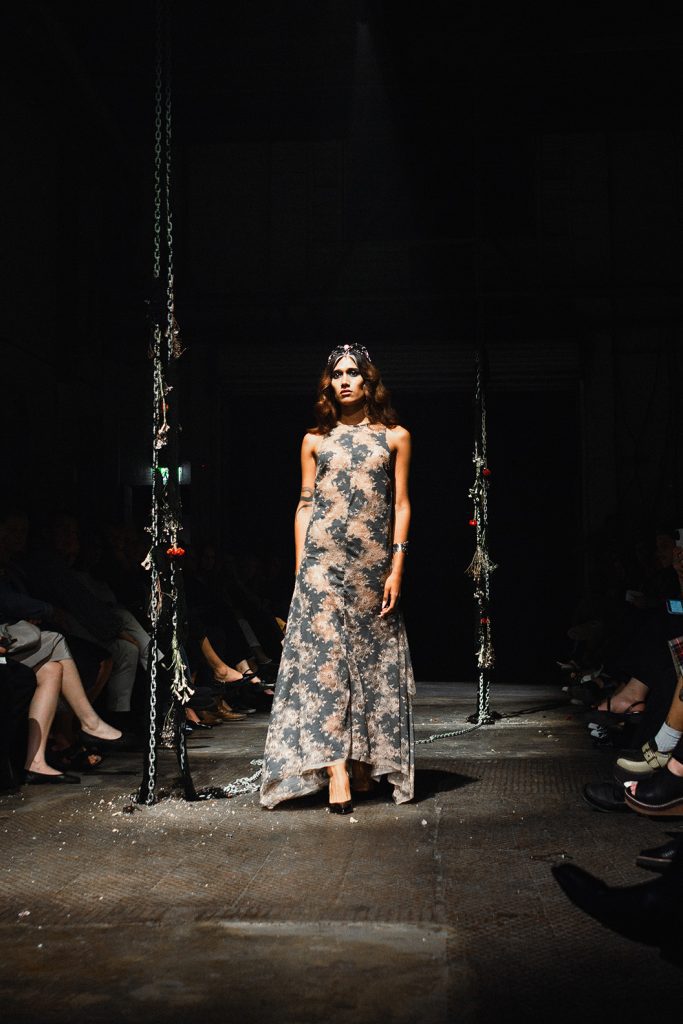
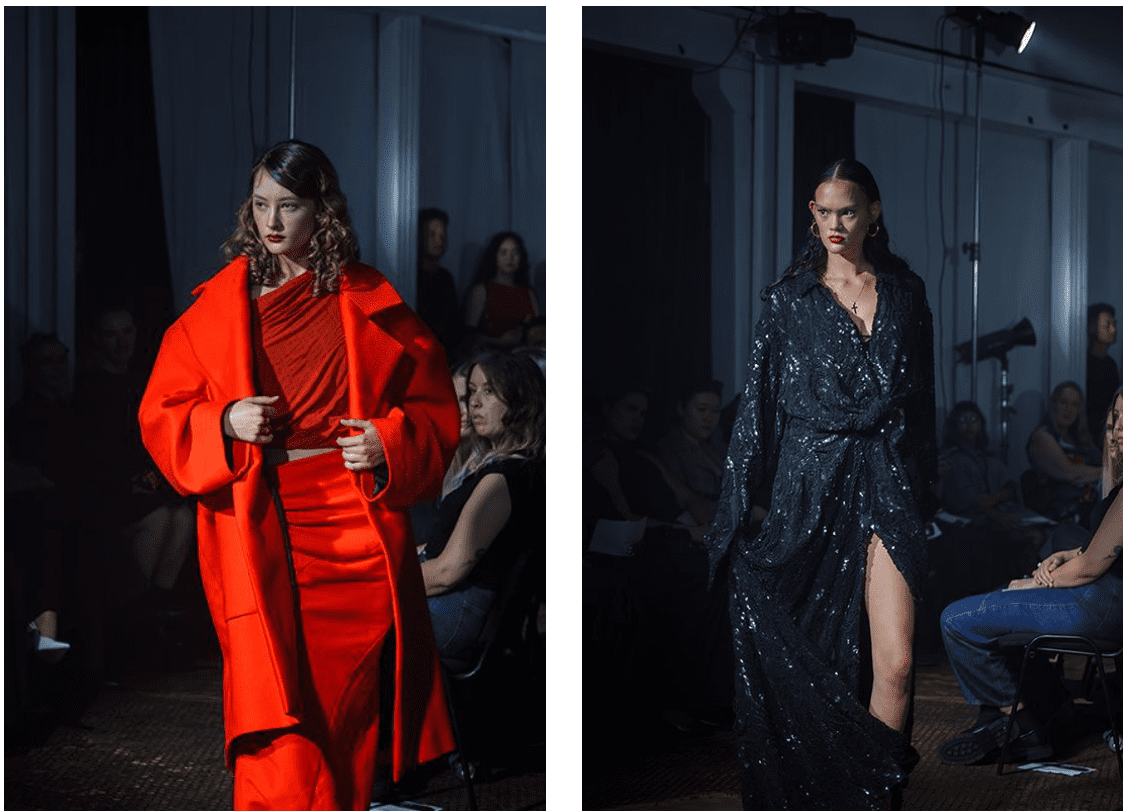
Pictured: L to R: ALIYAH HAZEL EDWARDS, Mitchell Vincent/ Fringes, Max Beach.
Āhua has shifted both physically and philosophically this year, the move to Clayton Street, into a cluster of former industrial buildings marked a departure from the roaming, semi-chaotic charm of Karangahape Road. There were fewer traffic-light dashes and mystery locations this time around, replaced instead with two fixed venues, a skate ramp, and the kind of breathing room that allowed both clothes and community to stretch out.
There’s always a risk when something independent becomes more organised, that it loses its edge. But Āhua’s latest outing managed to retain its grit while refining its delivery. As Paris Lloyd-Beere, Director of Media and Communications, put it, “I might be biased, but I think everyone has really stepped up this season. It’s run so much more smoothly and things have been very calm and chill. Our spirits have been high all week and it’s been really rewarding to see everyone deliver.”
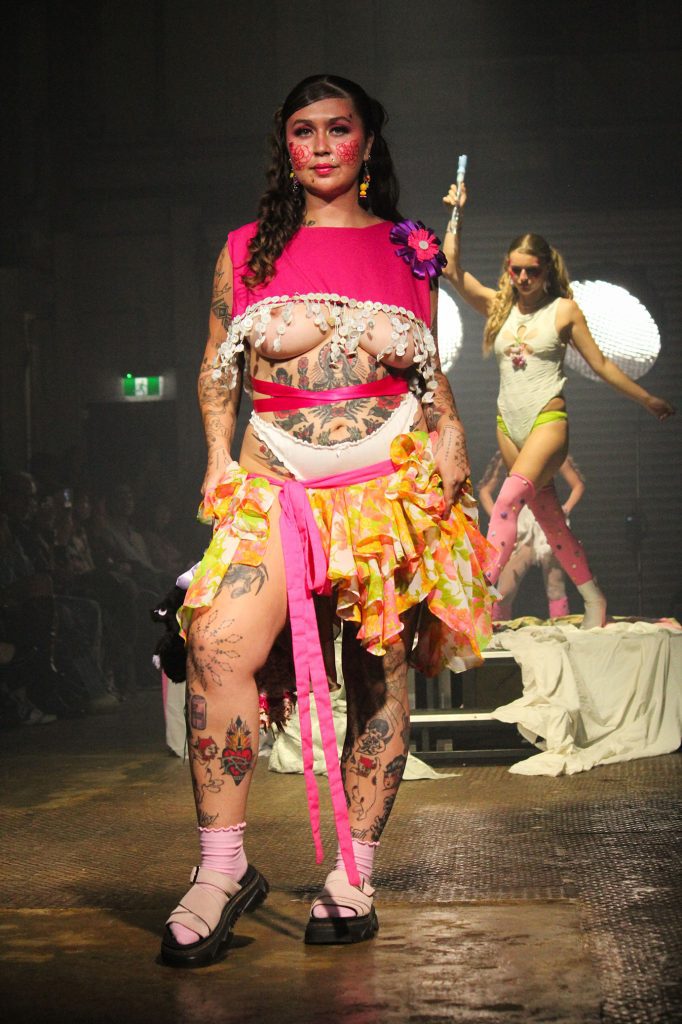
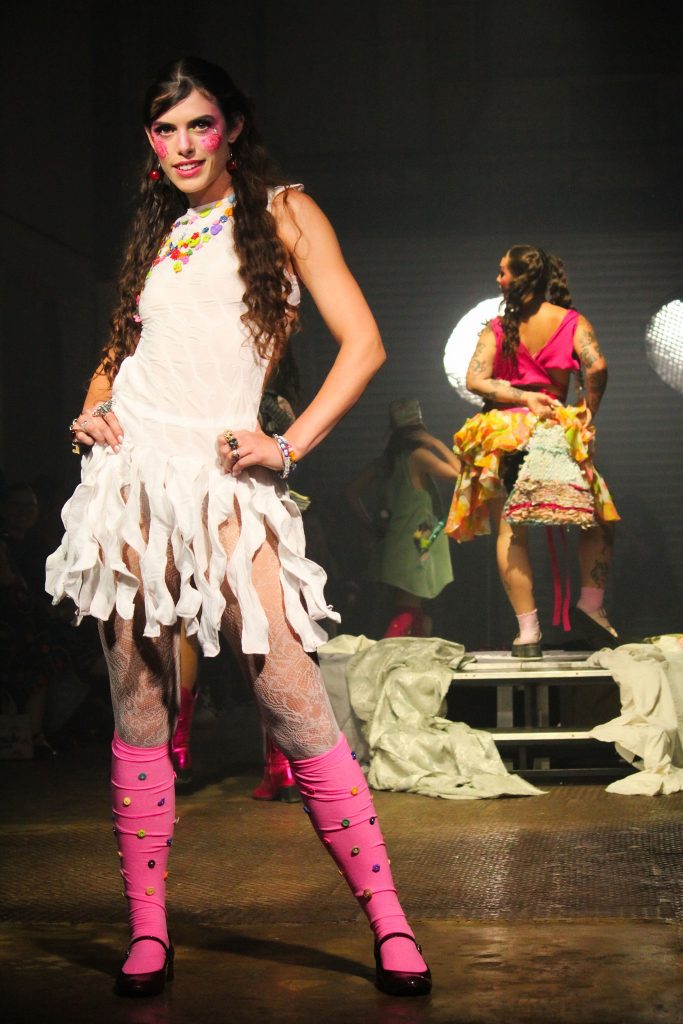
Pictured: Sherbert Lemon, photographer Jenna Chapman.
That sense of calm competence was palpable. Shows ran (mostly) to time. Venues filled up, often to capacity. Audiences lingered long after the final walk, clustering in the forecourt with drinks in hand, dissecting looks and reconnecting. “I think people are really craving things like this, that are affordable and that are fun and are new, and also unique,” adds Paris. “It’s great that people stay behind and they chat, and they either come with friends or meet new people. Personally, that’s one of my favourite things about Āhua. I love the fashion, but seeing the nurturing of a community, especially at this time in the world, is really beautiful and quite important.”
Offering opportunities that are otherwise harder to come by these days, Āhua has continued to build the event’s ecosystem, not just for designers, but photographers, stylists, videographers, producers, makeup artists etc., all finding their footing in a space that feels both professional and permissive to express themselves.
Among the week’s standouts was Finn Mora-Hill’s label Fringes, opening the event with an elegant collection inspired by 1920s workwear, reimagined through a contemporary lens. From utilitarian coats and structured shirting in suitably durable wools and brushed cotton, to beautifully fluid dresses in lace and velvet burnout, the looks were an intriguing exploration of labour and gender that was appealing and cohesive. His collection was impeccably styled by emerging stylist Levi Tan with gleaming metallic headpieces and striking jewellery by Anthurium. Preceding Fringes was designer Zoe Langley’s stellar androgynous take on historic silhouettes, together the show was called The Way She Moves, and set the tone for an incredible week of creativity.
An Āhua collaborator from the beginning, Finn’s label has grown as the event has, showing 35 pieces across 19 runway looks this season to a full house. “It felt really cool to be able to showcase a collection that size,” he enthuses. “It was amazing to have that many people in the room as I wasn’t expecting so many people. It was quite surreal and I feel very lucky to be in the position to do this show.”
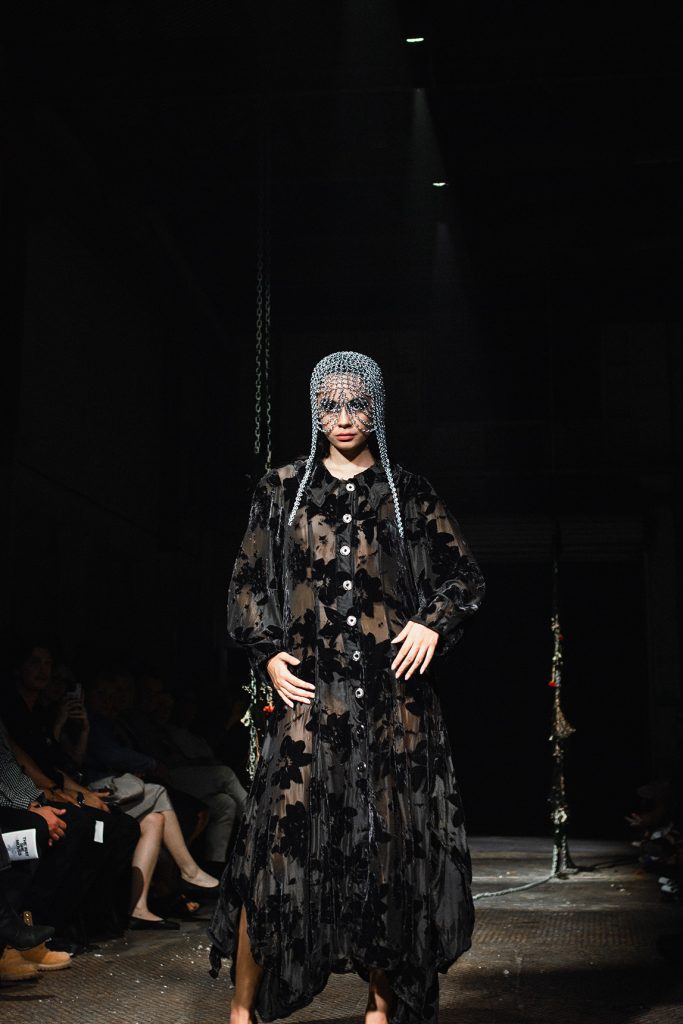
Pictured: Fringes, with head piece by jeweler Anthurium, photographer Max Beach.
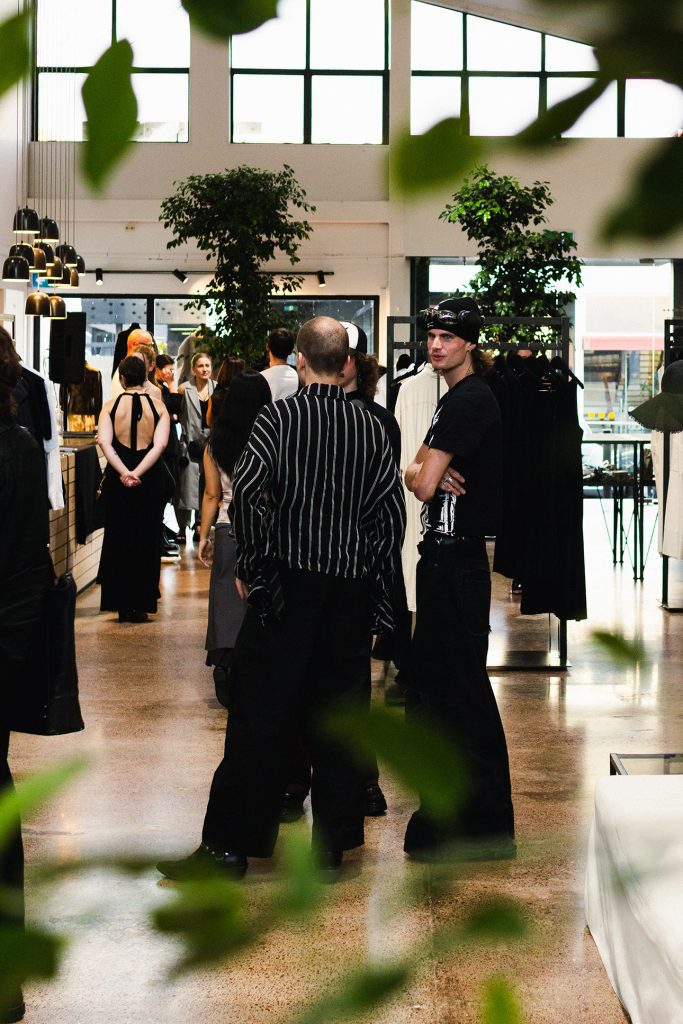
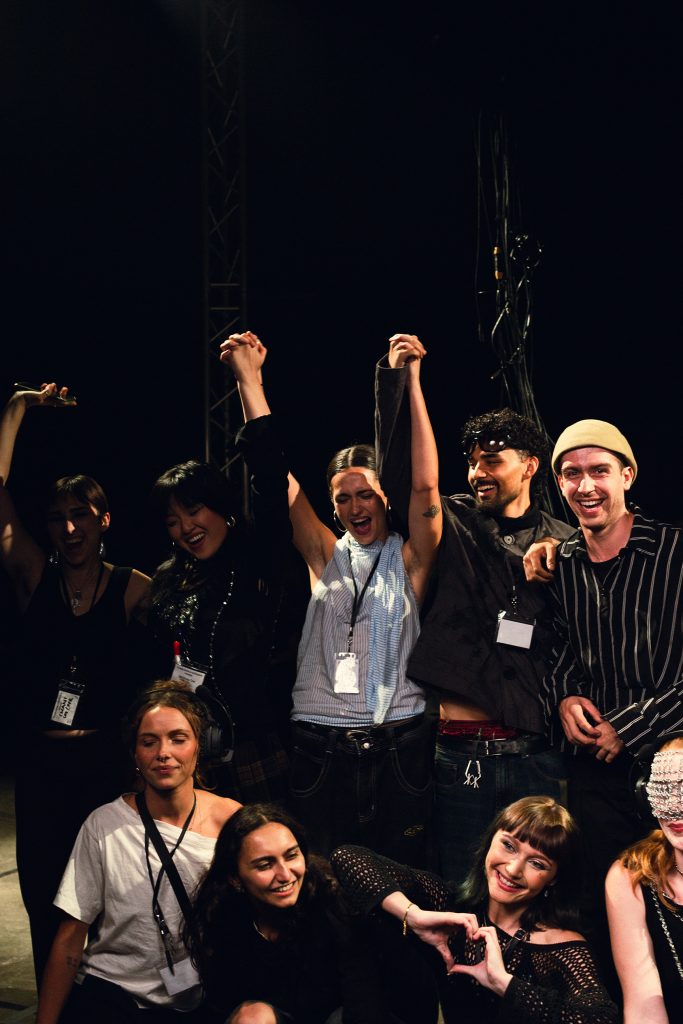
Pictured: Opening night at The Shelter, and then crew, Photographer: Max Beach.
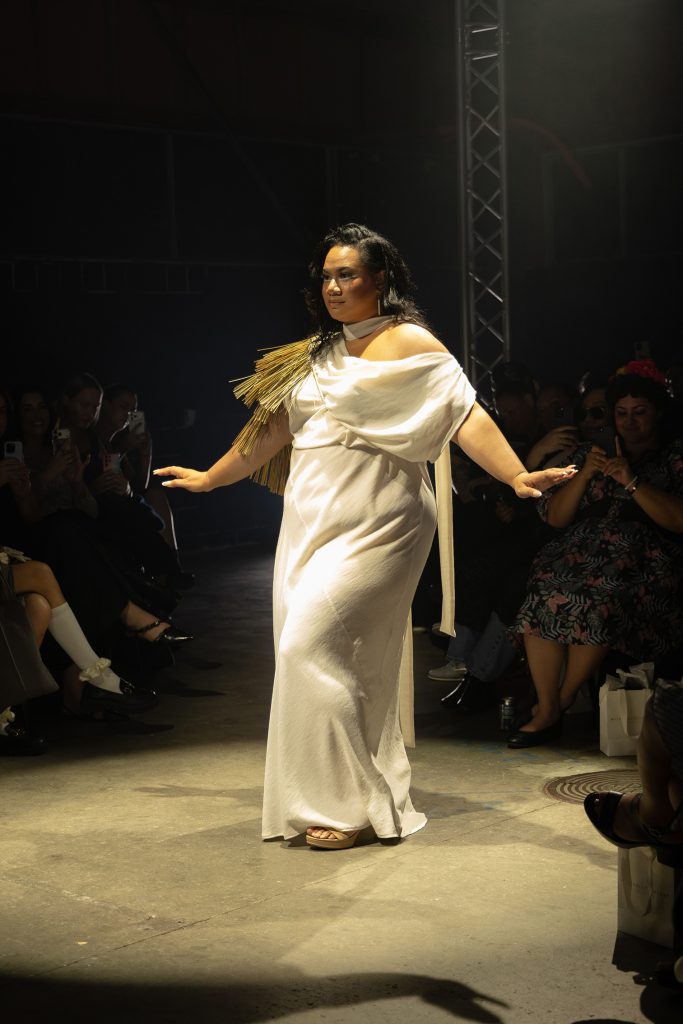
That sense of growth, both personal and collective, is central to Āhua’s appeal. Designers aren’t just presenting clothes; they’re learning how to build worlds around them. Plenty of brilliant emerging designers had their turn to showcase boundless creativity and personal expression, from the playful take on femininity by Sherbet Lemon to Stang’s whimsical knitwear, Winnie Catherine’s considered tailoring to Isabella Holland’s luxe bias cut eveningwear. The themes of each night were as different as they were fascinating and allowed the designers opportunity to extend their storytelling through sets, styling and lighting choices that amplified their designs.
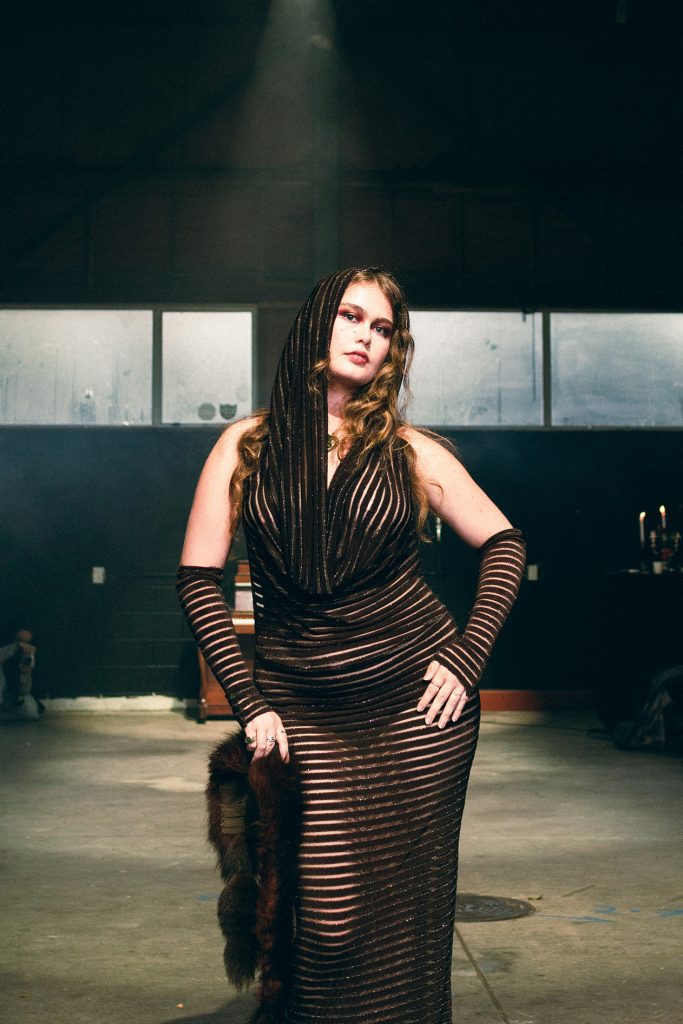
Alongside the newer designers marking their mark were the likes of established talents Mitchell Vincent and Jojo Ross, both of whom presented cleverly considered ranges that were rich in storytelling and of course, gorgeous clothes. Jojo’s was named after her new daughter Fenella, while Mitchell’s was thoughtfully styled to reflect his Māori heritage. Nicole Hadfield’s glorious Oosterom label also showed a chic range during the week, as did Adrion Atelier, a glamorous fave of last year’s NZFW, whose mesmerising showing was another highlight of the week.
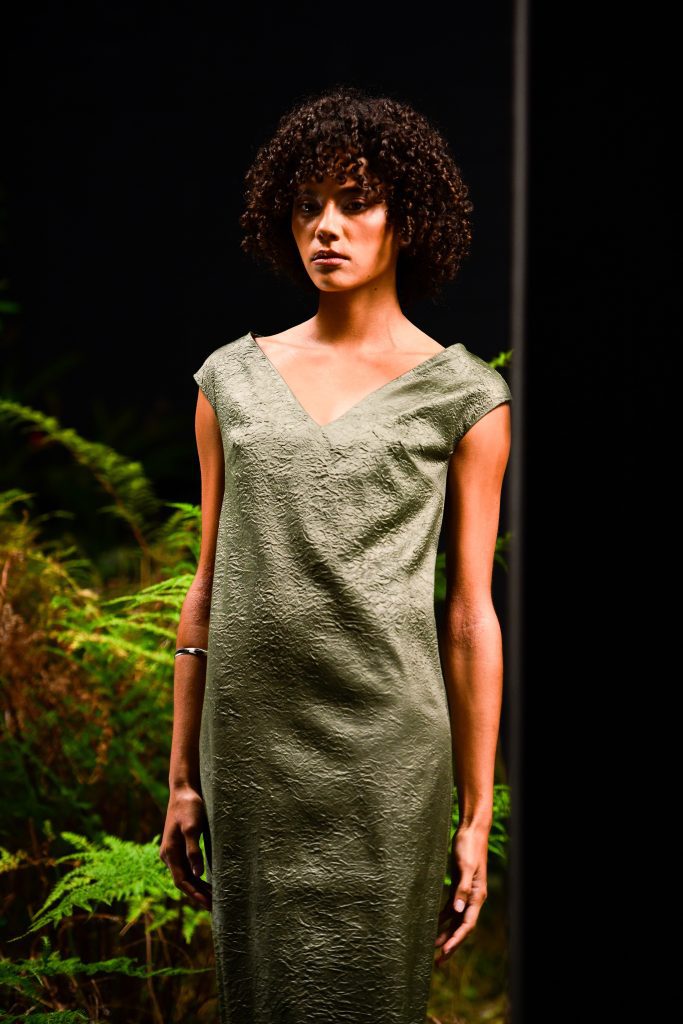
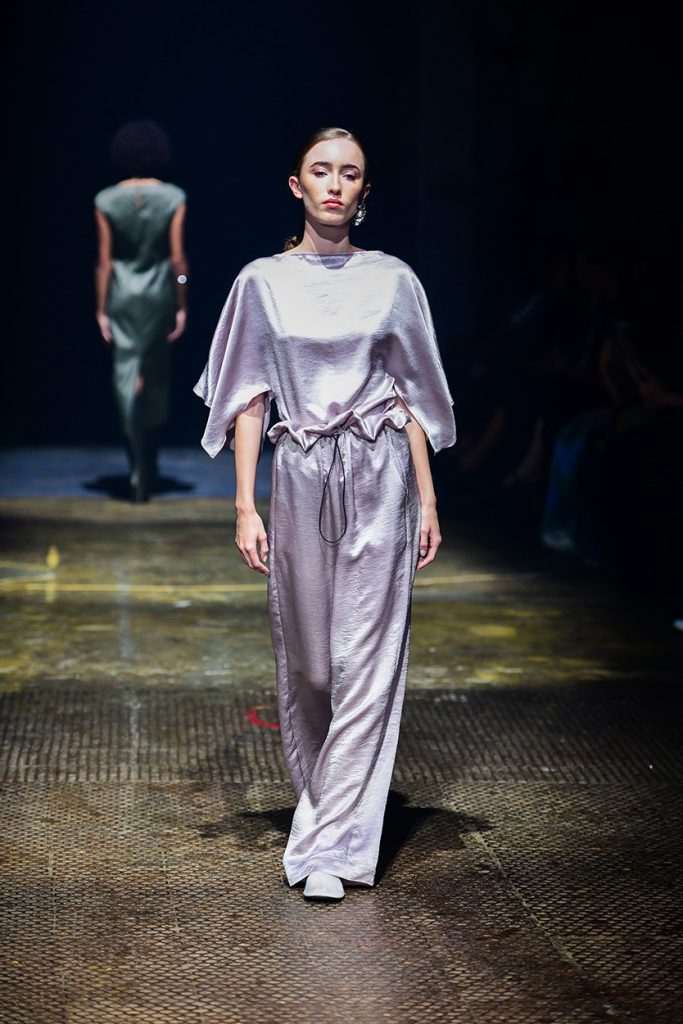
Pictured: Jojo Ross, photographer Fergus Clark.
As for the clothes themselves, shorts, for one, are no longer a side note, they’re a statement. Appearing across multiple collections, they’ve quietly usurped denim as the go-to base. School uniform codes continue to be reworked with relish, while fabrics have taken a distinctly luxe turn with satin, velvet and semi-sheer chiffon featuring on numerous dresses that swept the runway. There was a riot of colour from some presentations, while others pared things back to moody palettes, perfectly suited to the months of cooler weather dressing ahead. Every show was brimming with interesting ideas executed to a professional standard that were a joy to appreciate on the runway.
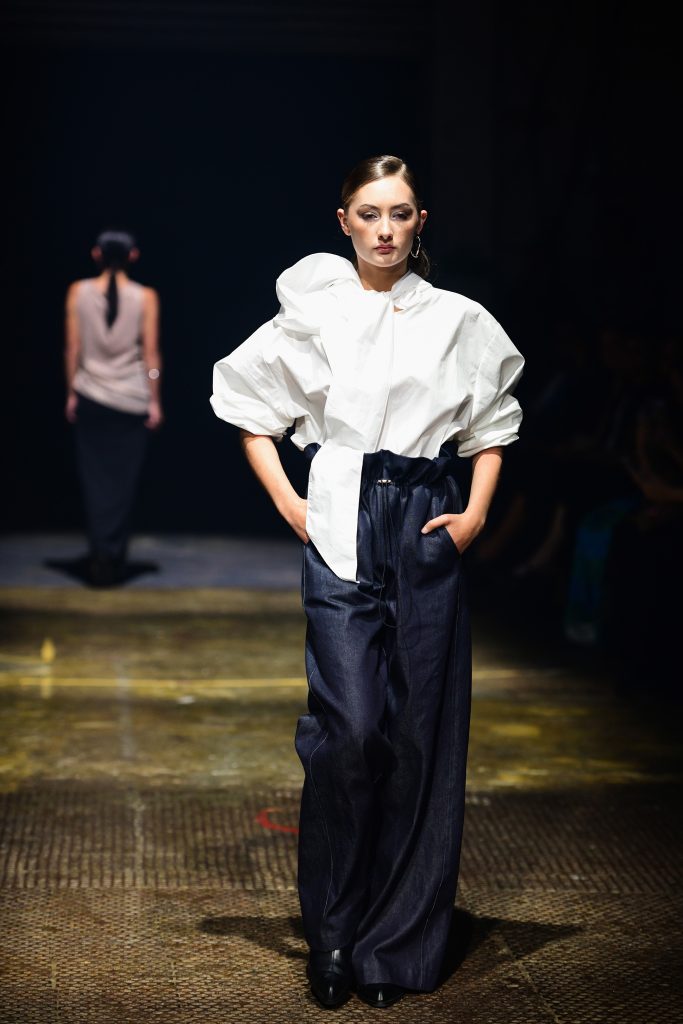
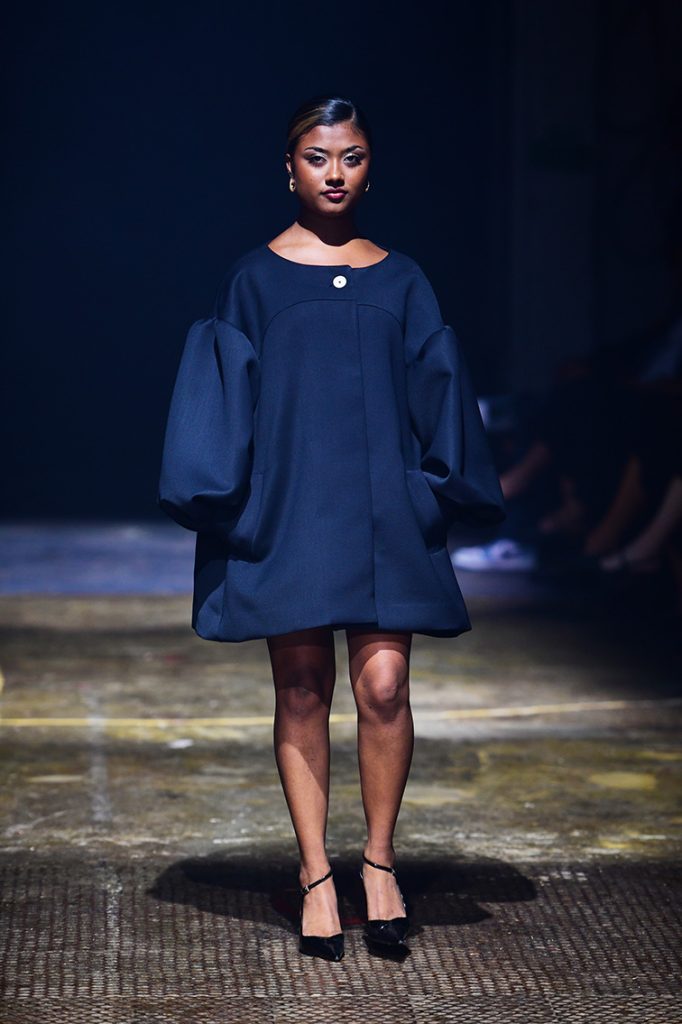
Pictured: Jojo Ross, Winnie Catherine, both photographed by Fergus Clark.
If designers are the backbone of Āhua, stylists are part of its connective tissue. Aforementioned stylist Levi Tan, made his runway styling debut this season, working across three shows including Fringes, Jojo Ross and Adrion Atelier.
For Levi, the experience was nothing short of transformative. “It’s a very special week, and I felt like styling these three shows was an incredible experience, I got to live out a different dream for each show and I’m really proud of the work I did and what we achieved together.”
His approach is instinctive, collaborative and deeply emotional. Levi described the moments after his first show with Fringes as overwhelming, “I remember towards the end I started crying, as I’m so grateful for the experience and Finn’s support of me, and it felt like the beginning of many shows to come.”
That emotional investment is perhaps what sets Āhua apart. This is not fashion at arm’s length; it’s fashion as lived experience. As Levi puts it, the week feels like “showing up for your friends and for your community, we’re young and hungry to work and support each other. It was like kids going to a candy store.”
Community comes up again and again in discussion with anyone on the event’s team. It’s easy to dismiss as a buzzword, but at Āhua it feels tangible. Designers help each other and attend each other’s shows, audiences overlap and collaborations spark organically.
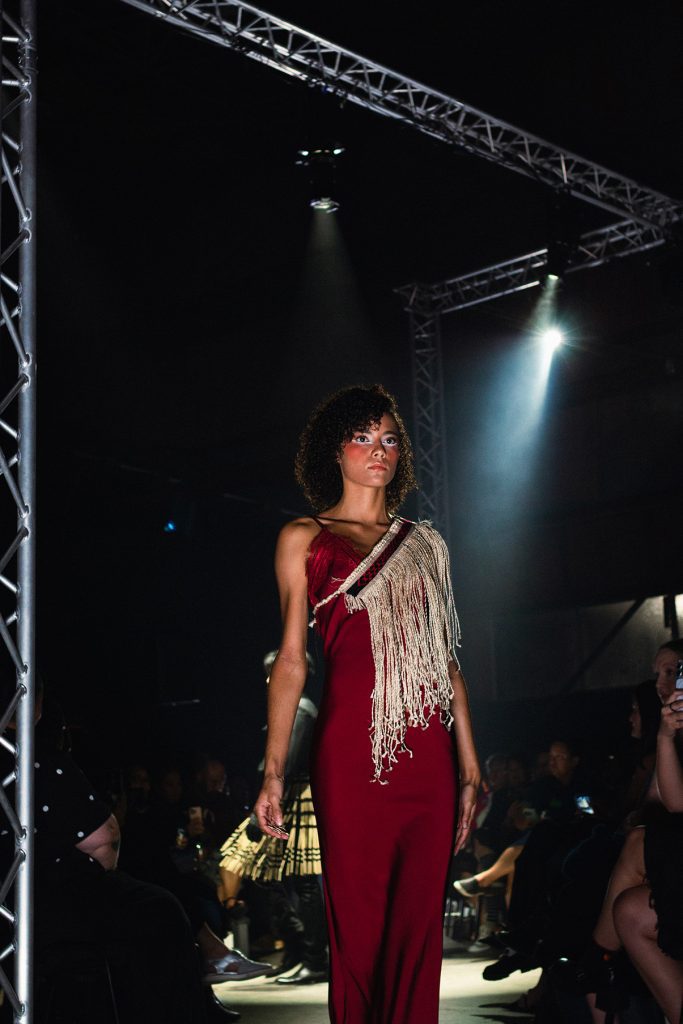
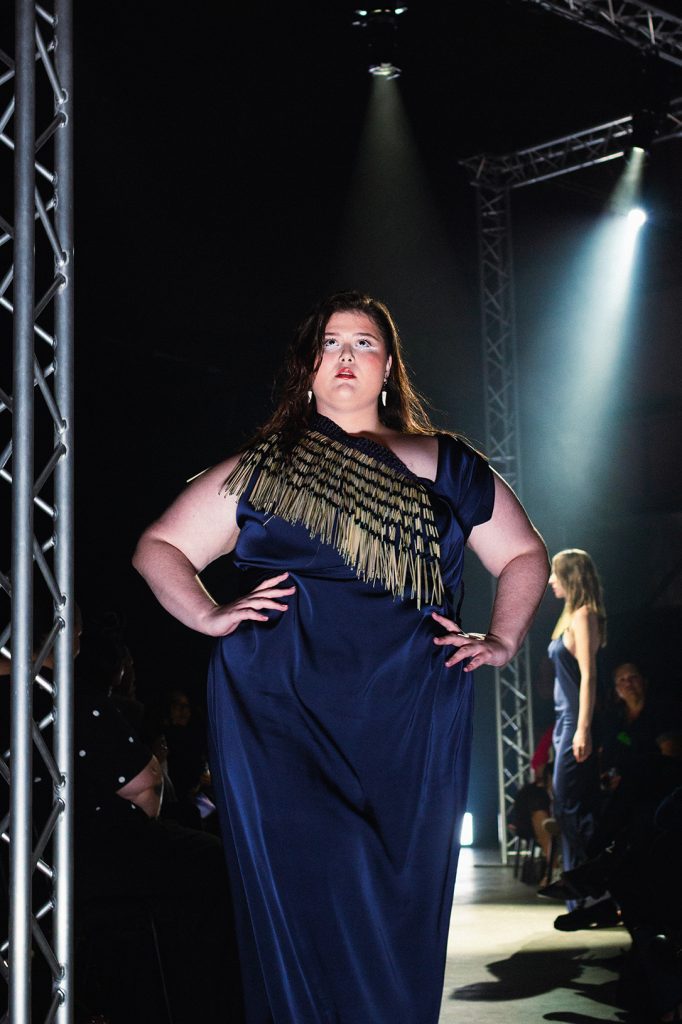
Pictured: Mitchell Vincent, photographer Max Beach.
It’s also what allows Āhua to straddle a unique space between emerging and established talent. With both first-time designers and more recognisable names, coexisting in a way that feels less hierarchical than a traditional fashion week and much more symbiotic.
The fashion industry has continued to take notice of the event, this season solid support came from industry leader Vicki Taylor, well known for her unwavering support of local designers. Her elegant Ponsonby store, The Shelter, hosted an opening party for Āhua and the designers taking part in the event had the opportunity to sell their clothing at a pop-up event at the high profile fashion store.
“I’ve watched Āhua quietly build momentum over the last few seasons,” says Vicki Taylor. “It was when I finally attended Finn Mora-Hill’s Fringes presentation last August, where I was blown away by the level of talent and fearlessness. He created three completely different dresses live on stage in just twenty minutes, alongside jeweler Anthurium.”
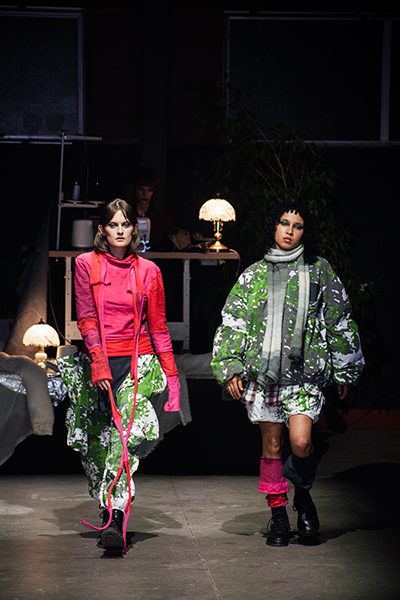
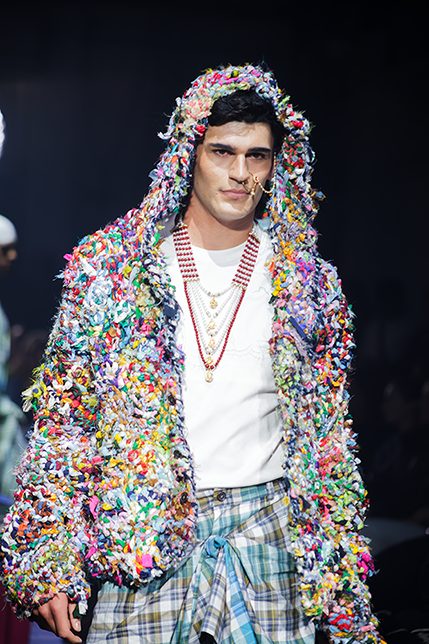
Pictured: The Cats Meow, photographer Max Beach/ Divergence, photographer Natalie Koren /Frayed Opulence, photographer @nataljk
The Shelter’s partnership with Āhua provided a platform for Vicki’s customers to discover these creatives more deeply – not just from a seat at a show, but through seeing, touching and trying on their pieces. “I wanted to give these designers a chance to experience what it’s truly like going from runway to retail,” she adds. “ We hosted workshops ahead of the pop-up to equip these designers, shared practical insights, gave them deadlines and supported each designer as they prepared for their first commercial release. It was a small insight into what The Shelter Emerging Designer Program does for up-and-coming designers.”
Like many attendees with an experienced fashion eye, Vicki was impressed by the level of workmanship shown by the designers, with many of the pieces entirely handmade. “It’s one thing to make a garment, but to ensure it’s up to scratch for the general public, all whilst preparing for a runway shows a talent, and drive. We have a lot to learn from these creatives, they are writing the rules to a new ecosystem, one that is fueled by passion and gritty integrity. It’s collaborative, inclusive and I feel there is something very special here that will take our next generation of creatives to a new level.”
In an era where fashion is increasingly mediated through screens, Āhua makes a compelling case for physicality. Clothes in motion. Fabrics catching light. The collective energy of a room reacting in real time. It’s not just about spectacle, though that certainly plays a part. It’s about context, understanding the labour, teamwork and sheer audacity required to produce a show from scratch, often with limited resources.
And then there were the moments you simply had to be there for. A warehouse door swinging open to reveal a spotlit garden. A guitar dragged down a runway. An aerialist contorting while dangling from the ceiling. The collective gasp of an audience confronted with something unexpected and intriguing.
In a landscape saturated with content, Te Wiki Āhua o Aotearoa has created something physical and deeply felt, a reminder that fashion, at its best, is not just seen but experienced. And that’s part of the magic, Āhua resists total capture, it’s best in person. Next season, you really should be there to enjoy it for yourself.
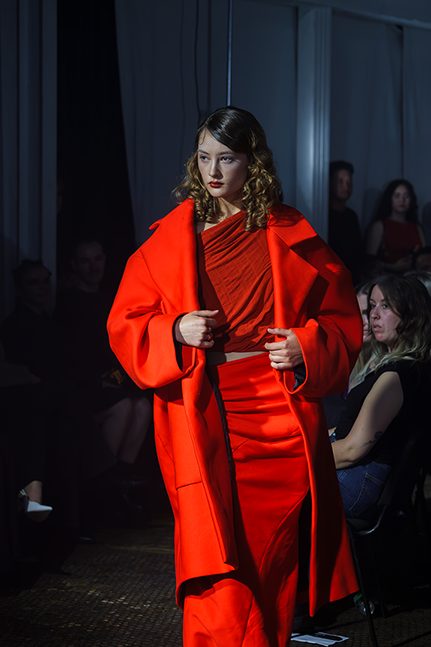
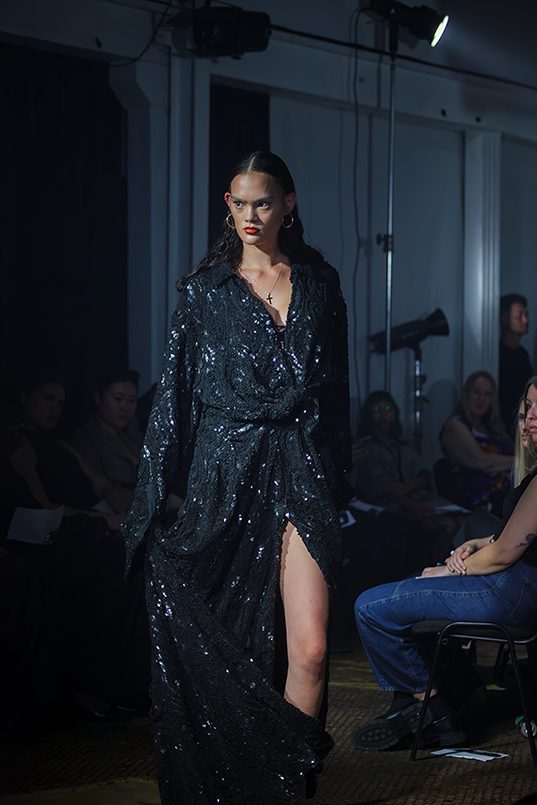
Pictured: Adrion Atelier, Photographer @nataljk