SP: Hi Ainsley! Who are you and what do you do?
Kia ora! I’m Ainsley, an Aotearoa-based empowerment photographer, storyteller and chronic illness advocate, living in Tāmaki Makaurau.
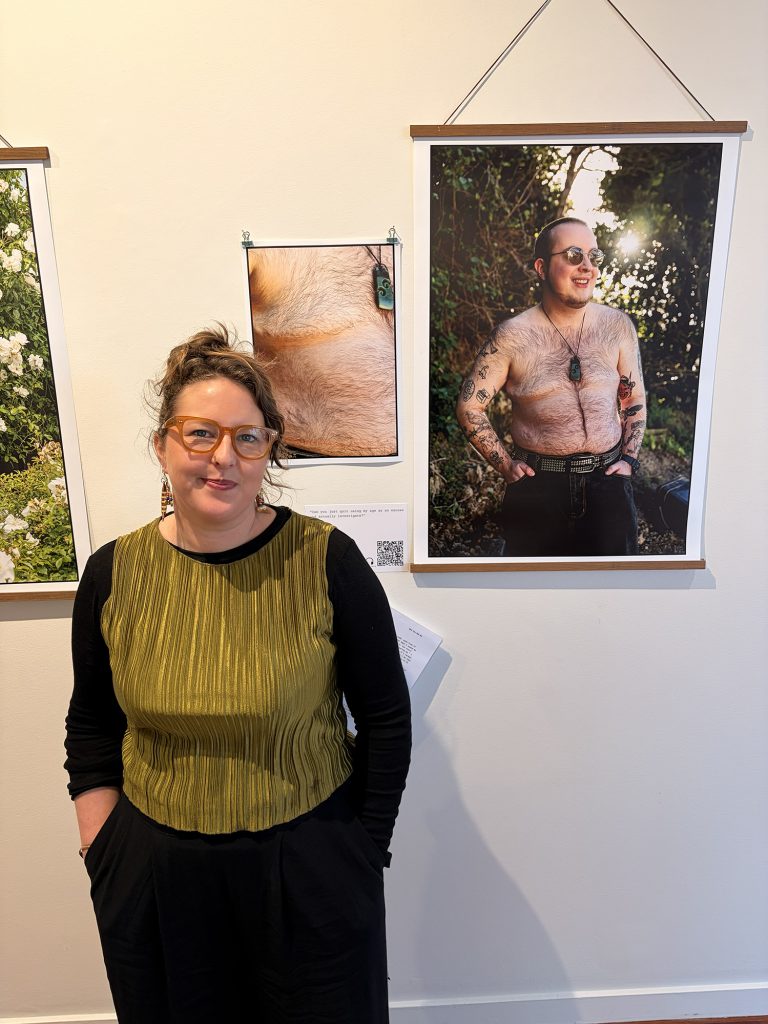
Ainsley in front of Alexs Portrait at Now You See Me in Wellington.
I’m big into telling stories that challenge the way we see ourselves and the world around us, particularly when it comes to bodies, illness and disability. I’m also the founder of Now You See Me, an endometriosis empowerment photography project that aims to make the invisible un-ignorable.
I used to travel a lot as a travel blogger, writer and photographer. But that was one of the first casualties when I became chronically ill. These days, when I’m not behind a camera or doing random advocacy mahi, you’ll probably find me in my garden with my dog. I also have a slightly obsessive love of Ancient Egypt, which has kept me slowly chipping away at Ancient History papers at the University of Auckland.
SP: You are a woman who lives with endometriosis in New Zealand. How did it come about that you wanted to explore the topic on a public scale?
In my worst moments, when I was literally bedridden, had had my entire life ripped away from me and had no understanding of what my body was really going through, I just kept thinking that “something good has to come out of this” – and not in an “everything happens for a reason” kind of way, but more in a “if I don’t use this awful experience to help others, then it would truly be a waste of my life” kind of way.
As soon as I was feeling well enough, I started pouring my energy into the Endo Empowerment Project. I put a call out for participants and was inundated with applications and as soon as I saw the need for something like this and the difference it could make in people’s lives, I was hooked. It is such an isolating, misunderstood and under-represented disease. It’s about time we changed that.
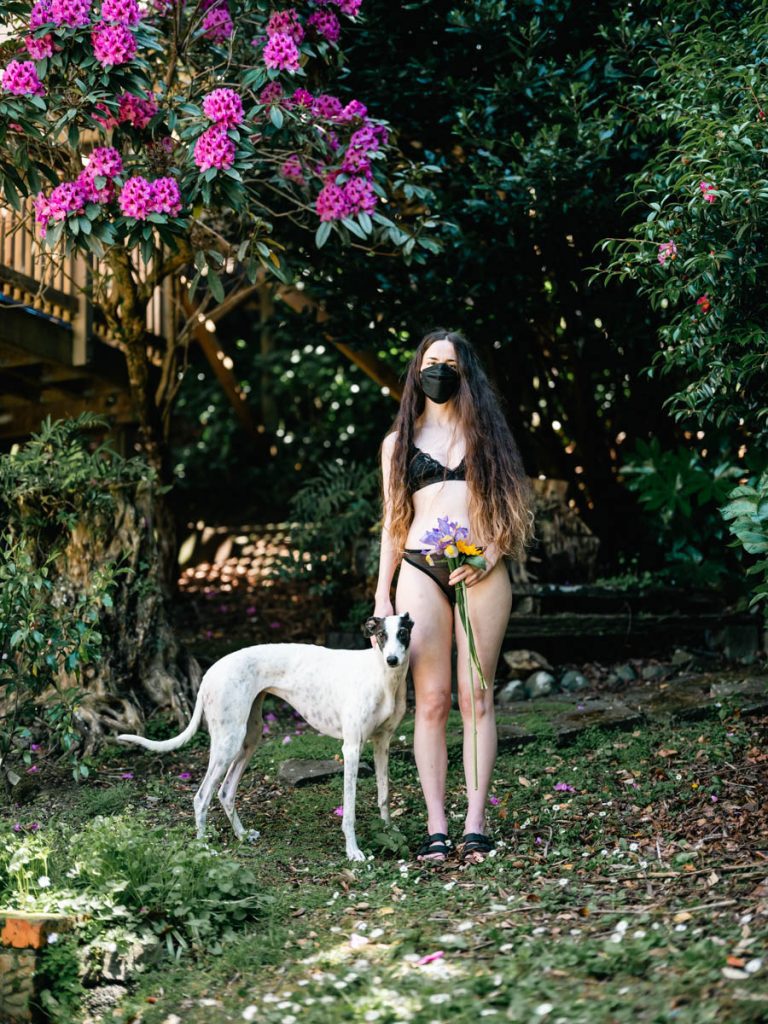
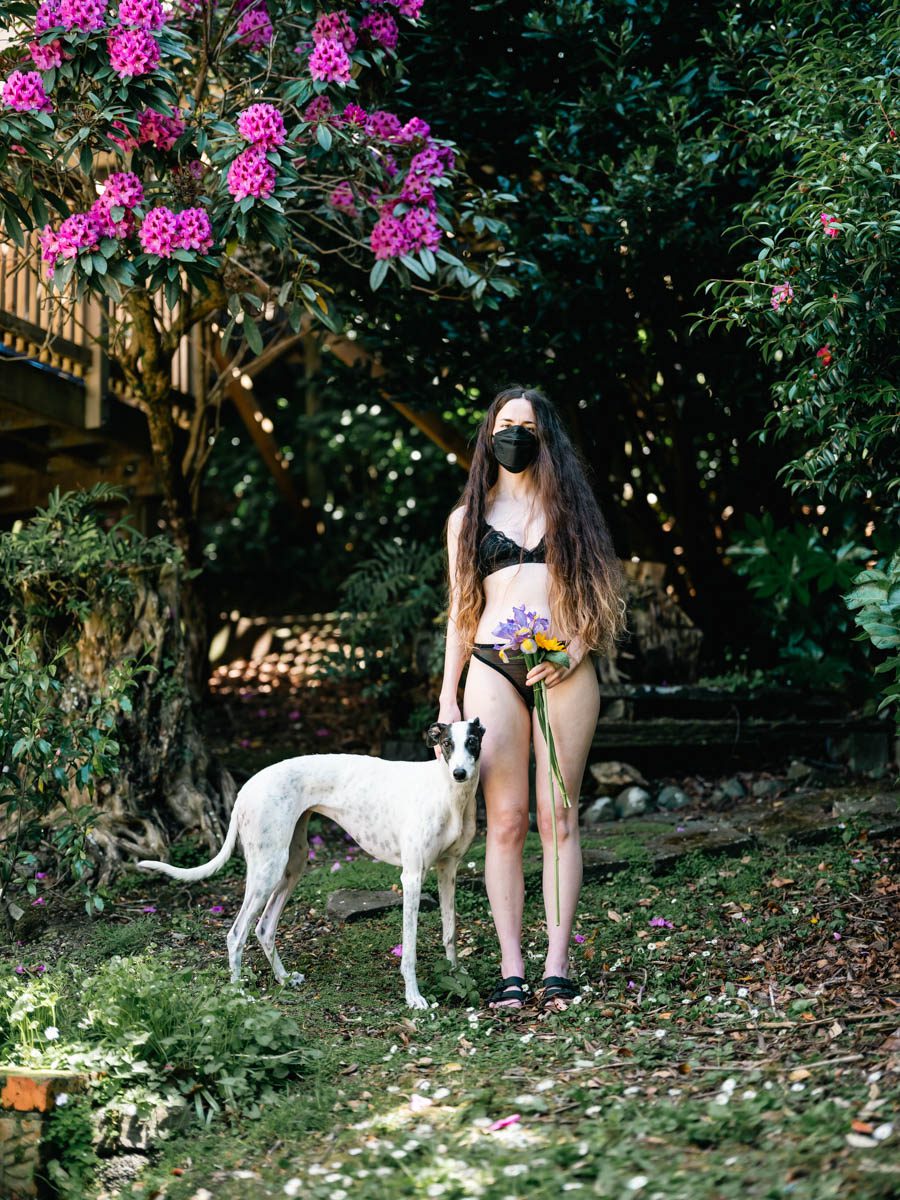
Ollie and her dog Astrid by Ainsley DS.
SP: How did living with endo yourself shape the way you photograph other people with the condition?
It shaped absolutely everything I did in this project, from how I planned my shoots (somewhere comfortable, safe, warm, easy, etc.) to how I exhibited my images. Accessibility, comfort and flexibility were key to making this work.
Unfortunately, I myself had a few flare-ups while completing Now You See Me, which meant I had to pause the project a couple of times. I even had to postpone my first exhibition date by six months. But because everyone involved in the project also had endo, they just got it.
It also meant that every single participant I met in this project felt like an instant best friend, because my god, was it refreshing to sit down with someone who had been on such a similar journey to me. People opened up to me because they knew I understood exactly what they had been through. I am not sure that someone without the lived experience of endometriosis would have been able to do this in the same way.
SP: Many of us are taught that a “good” portrait means hiding scars, bloating or mobility aids. What does empowerment look like in front of your lens?
For me, it has always been a big “fuck you” to the patriarchal beauty standards so many of us grew up with. I LOVE subverting the male gaze. I love taking photos that look “unflattering” or highlighting body parts that would traditionally be considered “flaws”.
Our bodies are naturally diverse, full of scars, stretch marks, freckles, rolls, hair, cellulite, etc. I see zero point in editing those out for a uniform, standardised idea of beauty. For me, beauty lies in the diversity. It lies in the corners of society that are so often left in the dark. It is about shining a light on those dark corners and helping people feel seen, valued and understood.
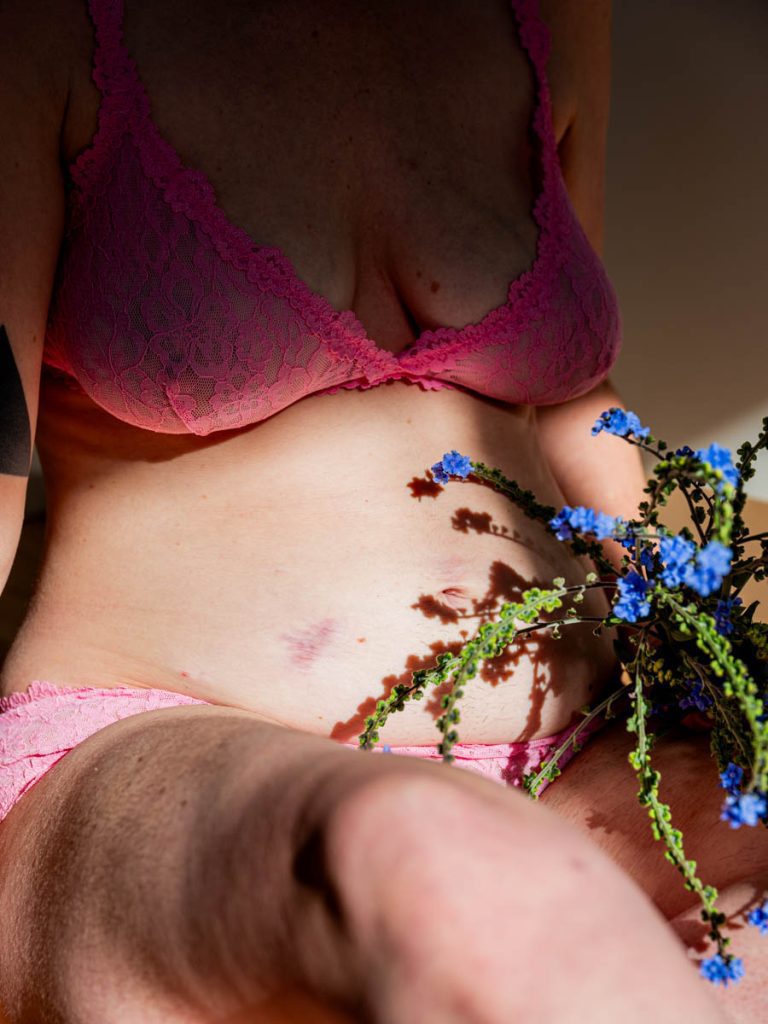
A close up of Nat’s stomach.
SP: The exhibition you put on, Now You See Me – The Endometriosis Empowerment Project, looked amazing online from Auckland. What was it like taking up space like that and getting to amplify this project?
The Now You See Me exhibition, which kicked off in Wellington in September, completely blew my mind. I had some idea and some inkling that it would be successful and well received, but I had no idea how powerful and impactful it was going to be.
Every day, we would have someone visiting the exhibition crying, sharing their stories and connecting with us. We had fathers bringing in their teenage daughters, partners of people with endo, older women who were post-menopausal telling us they wished they had seen this when they were younger, and we even had a group of 70+ aged gentlemen who came as part of the Wellington Photographic Society, asking questions with open-minded curiosity. It was just incredible to see how many people it affected, changed and even educated.
Every single day at Thistle Hall Gallery felt like a message from the Universe that we were doing the right thing, and I can’t wait to take it around the motu now.
SP: Endometriosis is often dismissed or invisible. What did you want visitors to understand when they walked into Thistle Hall?
I wanted to show how diverse the people affected by endo are, there is no “one type” of person who is affected by the disease. It is indiscriminate, which is why it was so important for me to include trans men and people of all ages, sizes and ethnicities.
I also wanted to highlight the fact that although a lot of the people included might look “fine” on the outside, the story that accompanied their image told us something else. Toasted skin syndrome, laparoscopy scars and bloating might hint at what’s going on, but in the wider context of the disease, they are a tiny aspect of how it affects somebody’s body.
SP: How did working with Endo Warriors Aotearoa shape the project, from its values to how the stories were told?
I really wanted to partner with the Endo Warriors Aotearoa so that we could increase the charity’s reach and impact and, ideally, raise some money. EWA has always been inclusive and LGBT+ friendly, so our values were already aligned, and I have been 100% behind the kaupapa of the charity from the first day I found out about it.
Endo Warriors Aotearoa is an incredible grassroots charity, essentially run on the sweat and tears of one incredible woman – Yessenia Sandoval. Yessenia also did an incredible amount of mahi to bring the exhibition to life in Wellington from organizing the venue, to pretty much the entire opening night, helping with set up, pack down, kai for people finding us from the street and young girls who couldn’t afford their first tens machine. You can tell she is someone who truly cares about the community. She’s the kind of person who would give you the last tampon in her bag, even though she was about to bleed through her own (lol, but seriously).
The impact she and her work has on the community is truly life-changing, and I really wanted to highlight that it’s not just about advocacy, education and practical help, but also community-building for people who are so often left isolated. Big aroha to Endo Warriors Aotearoa.
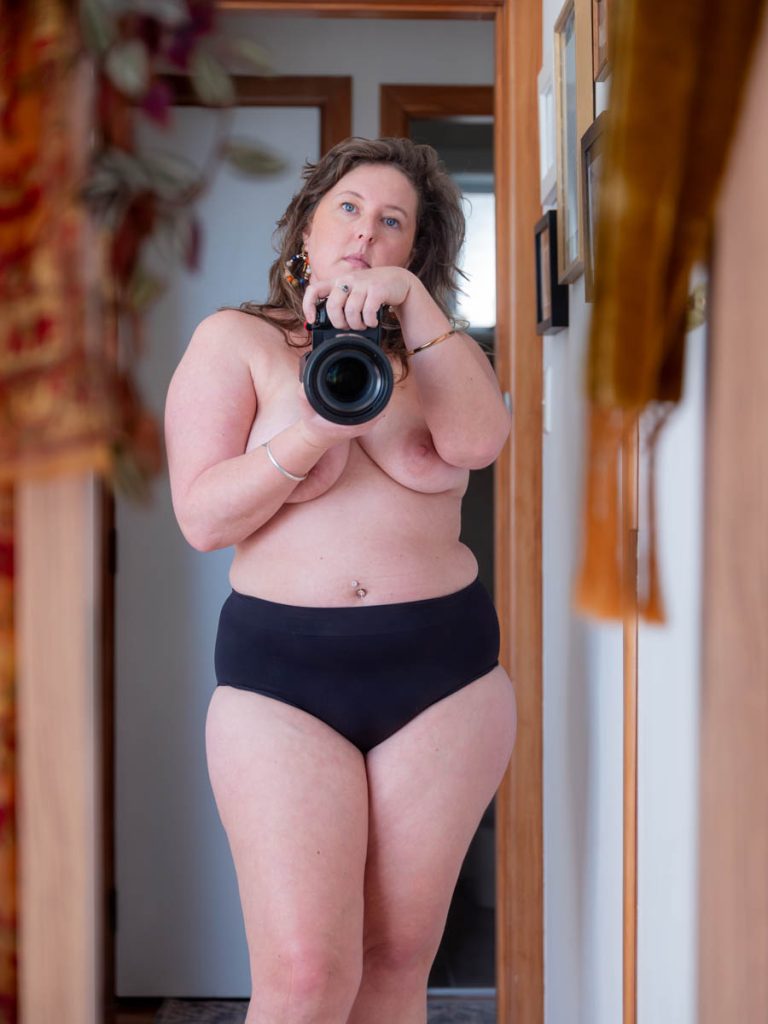
Ainsley’s Self Portrait as part of the Now You See Me Project.
SP: As a storyteller, how do you balance honesty about pain with celebrating strength and beauty?
This was something I struggled with the whole way through the project, and it was really important to me that I got the balance right.
There is so much pain and trauma in so many of these stories. Sometimes, it was really, really hard to sit through them. But there was also so much hope, so much strength and so much beauty that it became easier and easier to look at each participant’s story and find some beautiful, wholesome, life-changing nugget about their experience that carried them forward.
I wanted to include those moments because I know the impact that sense of hope can have on people reading and listening to those stories.
Like, yes, this person went to the depths of hell, but look at them now, standing proud in their body, sharing their story and having the strength to try and change things. It was really important to me to honour that pain and the shit they had been through, but also to let people know that it will be okay.
SP: What’s next for the project, and how can readers support people living with endo?
Opph! So many things!
First is another pop-up exhibition in Wellington (because the first one was so hot in demand!), then an exhibition in Auckland, and hopefully Christchurch and smaller towns and cities in between. We just need to make sure we can secure the funding to keep this good thing going.
I will also be launching an online exhibition and international collaborative project over on endoempowermentproject.com so that people from all over the world can share their stories.
I work full-time in a comms role, so it’s a lot for me to be doing on the side. My dream, of course, is to turn this into a sustainable, full-time project. So please send this article to your rich, generous friends.
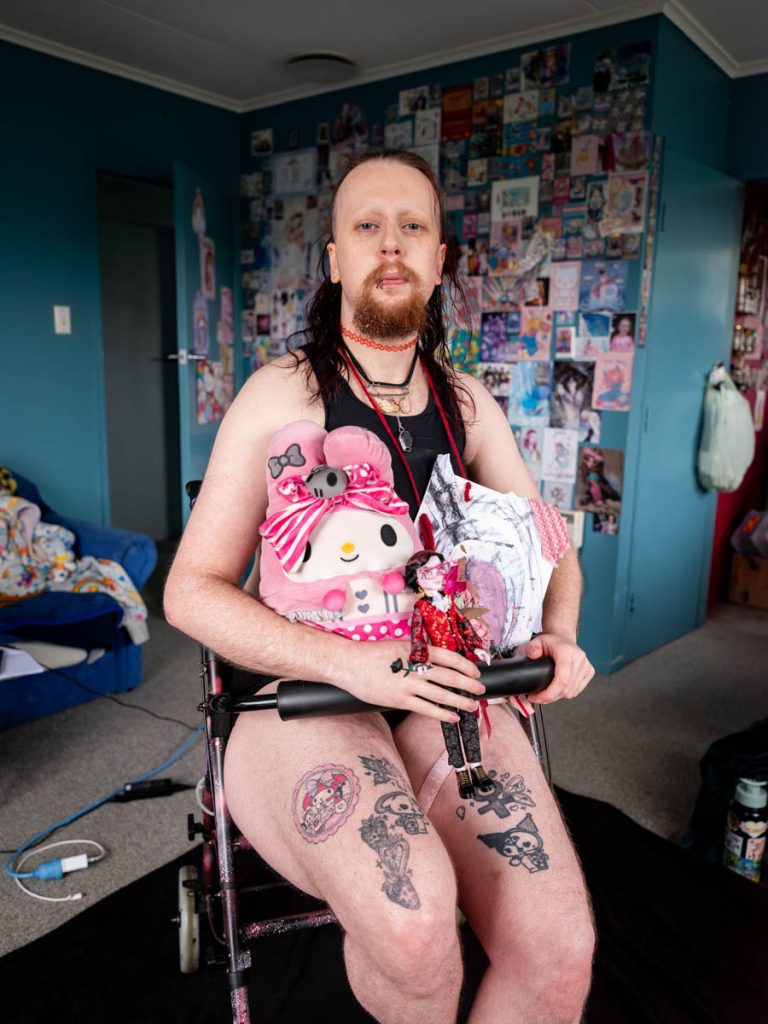
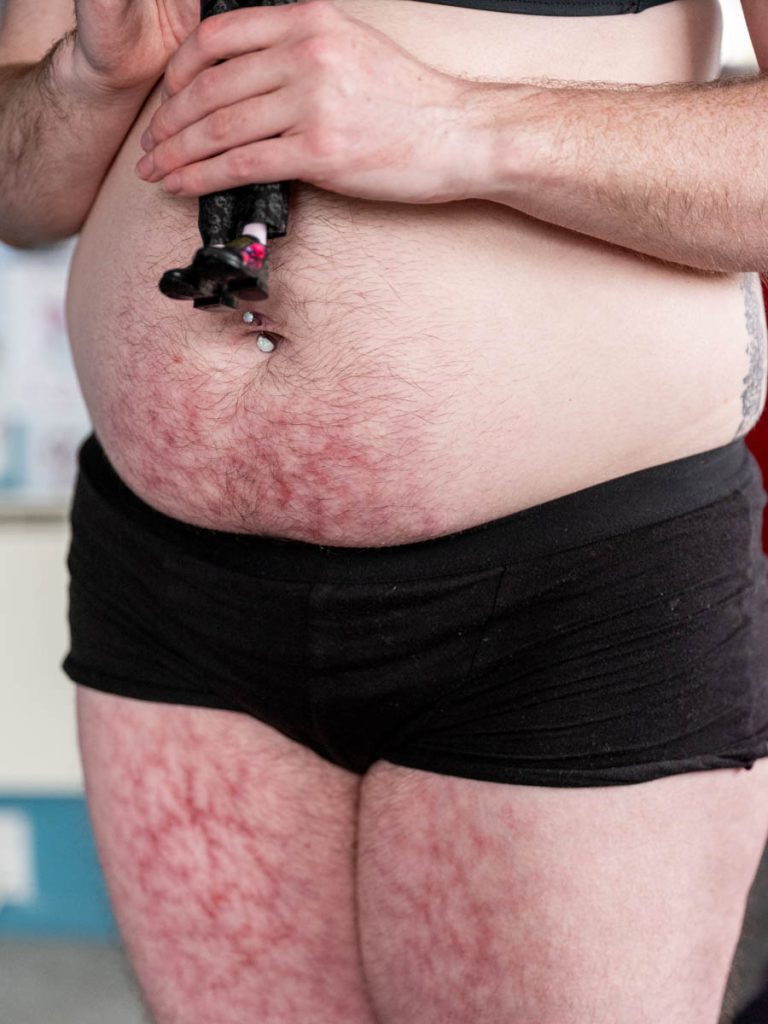
Clever and A close up of Cleaver’s toasted skin syndrome by Ainsley DS.
SP: What is something most people don’t know about endometriosis?
I mean… Do most people know anything about endo? I’m not so sure. I don’t even think most doctors know anything about endo, to be honest! (Joking, but not.)
I actually asked this question in my interviews with people, and the most common answer was that endometriosis is not a “period disease”. It’s not even just a gynaecological or reproductive disease, it is a chronic, inflammatory condition that can affect multiple systems throughout the body. It can affect organs beyond the reproductive system, including the bowel, bladder and, in rare cases, the lungs, eyes, brain and other distant sites (even finger nails!). It really does eat away into every aspect of your life (and sometimes your organs).
It is massively underdiagnosed, and its impact on people’s bodies and mental health is under-researched and underestimated.
It’s a brutal, nasty and complicated disease that needs more funding, more research and more awareness. I’m stoked that I can help to change at least one of those three things. x