Interesting Women: Emily Makere Broadmore of the Salacious Folly Journal
All the cool things seem to be happening in Wellington at the moment. And one of those things is Folly.
6 min read
All the cool things seem to be happening in Wellington at the moment. And one of those things is Folly. There is a particular kind of person who looks at the state of New Zealand publishing, shrugs, and decides to start a literary journal anyway. Emily Makere Broadmore is one of them. As Editor-in-Chief of Folly, a Journal that’s anything but typical. Broadmore has made a habit of backing Aotearoa’s weirdest, most wonderful writing.
SP: You’ve stated you came back from New York having read all these literary journals and thought ‘why doesn’t New Zealand have this?’ What was the moment you decided to actually do something about it?
F: Honestly, it was one of the naive ideas that occurred to me, probably as I was doing the laundry, in mid 2022, and I never imagined what it would grow in to. It came from wanting to do something good for other local writers because we had nothing of this standard in New Zealand. I didn’t realise what I was getting myself in to. My initial budgets turned out to be fifty percent of the actual costs of running the publication – and that’s with me, Dana and most of our team working voluntarily.

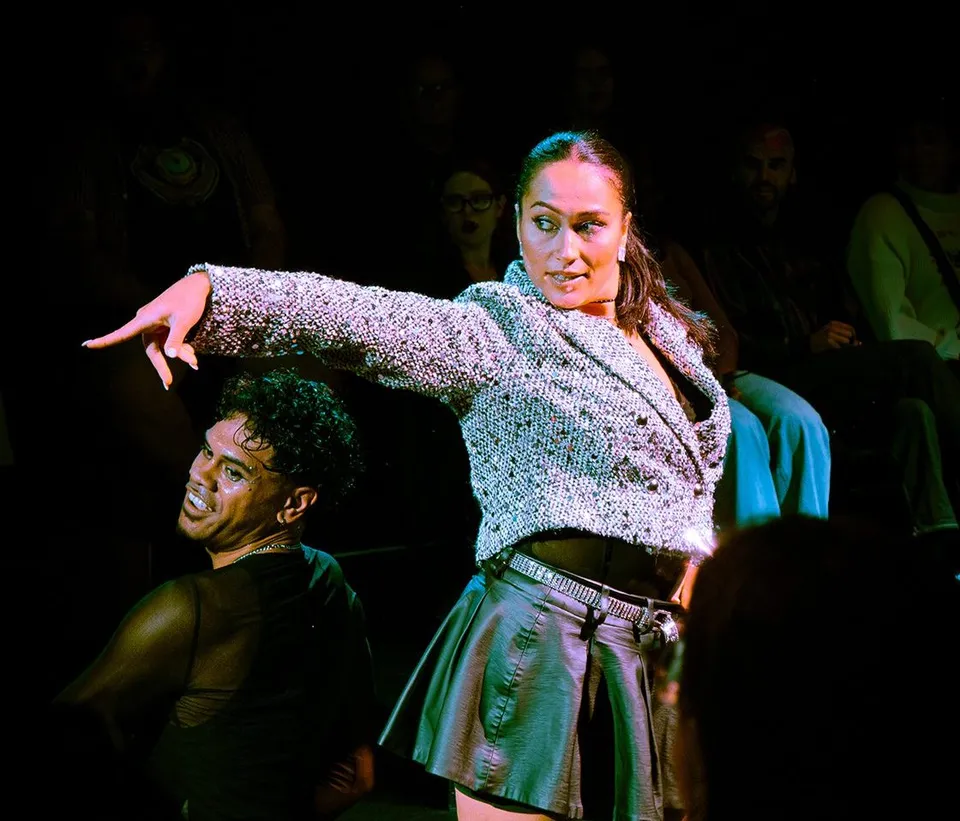
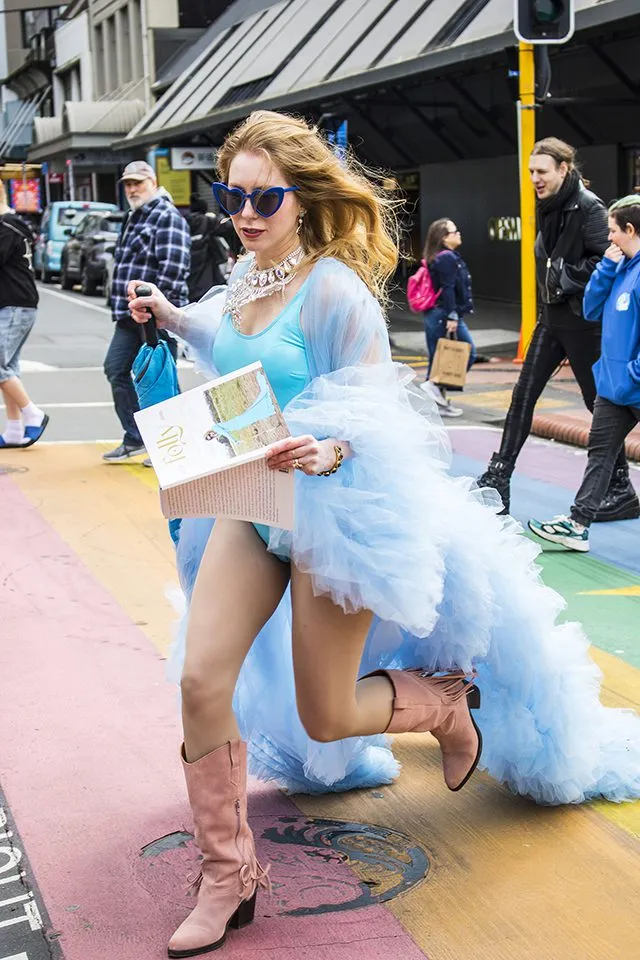
Pictured: Emily Makere Broadmore.
SP: What do you think about the cut in funding to the Arts? Will this affect you directly and do you think it’s made it harder to be a creative in Aotearoa?
F: Folly’s whole model is that at you can’t sit around waiting for the state to fund culture into existence. You have to build something yourself and prove that you can back your own ideas. If any arts project relies entirely upon grants for survival then it shouldn’t exist. There is so little funding, any that exists should be growing existing proven projects and not propping up ones that can’t survive on their own. It’s not helping the fragile ecosystem, because when funding stops those projects fall over and that lets everyone down.
I haven’t paid much attention to the cuts because Folly has never been successful when applying for those public grants. People are always surprised when I tell them that. I think there is a perception that because I have managed to self fund the press this far, we don’t need help. The truth is, Folly is growing to support more writers and this is the moment when we really would benefit from some support to scale.

SP:You received 1,400 submissions for your very first issue. Did that surprise you, and what did it tell you about the appetite for something like Folly in NZ?
E:It was amazing, but I had no barometer of normality so I didn’t realise how incredible this was. It’s now, years in, that I realise we sell five times as many journals as most established (and often university funded) literary journals – and attract way more submissions. But at the start, I didn’t know this. It just proved that we were doing something right for New Zealand, and for writers internationally who want to somewhere different to send their work. Right now more than half our submissions are international writers but we do end up with a fairly even spread of New Zealand contributors vs international. It may be something we need to monitor overtime, as our international presence is larger than our New Zealand presence. But we are an international publication. New Zealand writers deserve an audience that is larger than just our tiny cliquey island at the bottom of the world.
SP. Folly describes itself as “the love child of a literary journal and a Victorian gossip rag.” How do you hold those two things together without one swallowing the other?
E:This is the curation trick – the gossip rag energy provides the antidote to more serious content, it is the fun and frivolity. It is the story about Guyon Espiner’s underpants, or the story that got us in trouble with Whitcoulls last year. If you are only publishing lighter content, you are creating something disposable. If you only have the literature, you are only speaking to a tiny cliquey scene. But when you curate the two together, you are making literature accessible and fun. This is what Folly is about – intellectual stimulation and entertaining stories all wrapped up together.
SP. Folly is print-only in an era when everyone is going digital. Is that a philosophical stance, a practical one, or both?
E:It has been mostly philosophical. We’re drowning in screens and a beautiful print object you can’t scroll past becomes a treat. It was also about managing quality – print on demand can’t provide the quality we require for Folly. However, we are now starting to open Folly up as e-books and Issue 003 is on Amazon and other sites now.
SP: Walk me through the moment you found out Whitcoulls was pulling Folly from their shelves. What was your first reaction?
E:I started laughing, because it was all too ridiculous. I took a call from our distributor and was in shock, laughing, thinking ‘surely we can sort this out.’ My next thought was horror that they had thousands of dollars worth of stock (that they had ordered), and were refusing to sell it. But I have a PR background, and they’d just given us the chance to publicise the fact there was, apparently, something offensive between our covers. You cannot buy that marketing – so I called the team and we moved straight into crisis comms.
7. They said the content was “offensive” but never specified what. Did you ever figure out what actually triggered it?
E: No, and they never spoke to us about it. But their staff did – between all the leaked emails, text messages and Instagram messages, we figured out that some woman at head office took offense to the frankness of female desire, potentially the amount of queer content, and the work ‘cunt’ – which Australian author Nikki Gemmell had written a rather academic essay about women reclaiming as a word. Apparently they also didn’t like a piece of modern art with a snake slithering over a women’s pelvis, illustrating a story called ‘At least my pussy’s smooth’. We had placed that next to an interview with the Reserve Bank Chief Economist.
SP: Nikki Gemmell’s essay, f-word poetry, ayahuasca, teenage sexuality… Issue 003 is pretty fearless. Where’s the line for you between provocation and gratuitousness?
E: This is about craft and curation, and art – because art is meant to provoke. It’s pointing at something true that people wouldn’t usually say – the teenage sexuality story for instance by Katy Knighton. Gratuitousness is shock with nothing behind it. We aren’t publishing to be edgy – we are publishing truth. I honestly thought Issue 003 was far less provoking that issue 002, but we never tried to get Issue 002 into Whitcoulls.

SP: This year you’re launching Folly Erotica. After the blowback of being ‘too scandalous’, what made you want to press the accelerator on this theme?
E: We have always received a lot of erotica and content that we deem too sexy or pornographic for the journal – which is a sexy item, but it’s a luxury item. But after what occurred with Whitcoulls, given they have shelves full of pornography, it seemed natural to provide a space in Folly for more erotica content. My thinking is, if the gatekeepers think women’s desire is offensive, fine. We’ll give it its own imprint. As it turns out, a lot of men have submitted writing about their desires- and some of this content is probably the most contentious. But, it is human. It is real. So we will publish it.
SP:What can we expect from Folly Erotica, and what sets it apart from Folly Journal?
E: What is the difference between erotica and porn? And what desires and real stories of sexual interactions are appropriate to share? This is the line we have had to tread with Folly erotica. Because human desire is often raw, filthy and very un-PC. And here we are welcoming those stories. There have been some very good pieces we have had to turn down, because we would actually get banned in the current modern age. And others that I know will offend some people. But these are real stories, from real people, and we should be able to have a debate about human desire without people getting all worked up.
Support local creative talent (and enjoy a great read) by picking yourself up a copy of Folly here.