5 Minutes with Sean Ackland: Cost of Living, the NZ Election, and Sci-Fi
SP: Sean, you’re best known as a political commentator and an author, yet, at first glance, your books aren’t about politics. How did you come to do two such different things? Is there a connection? S: I don't think that art and politics are mutually exclusive. I think everything, when you boil it down, is always going to be inherently political. Creative works of fiction are no different. You know, the movie Con Air is political, and my book is no exception.
9 min read
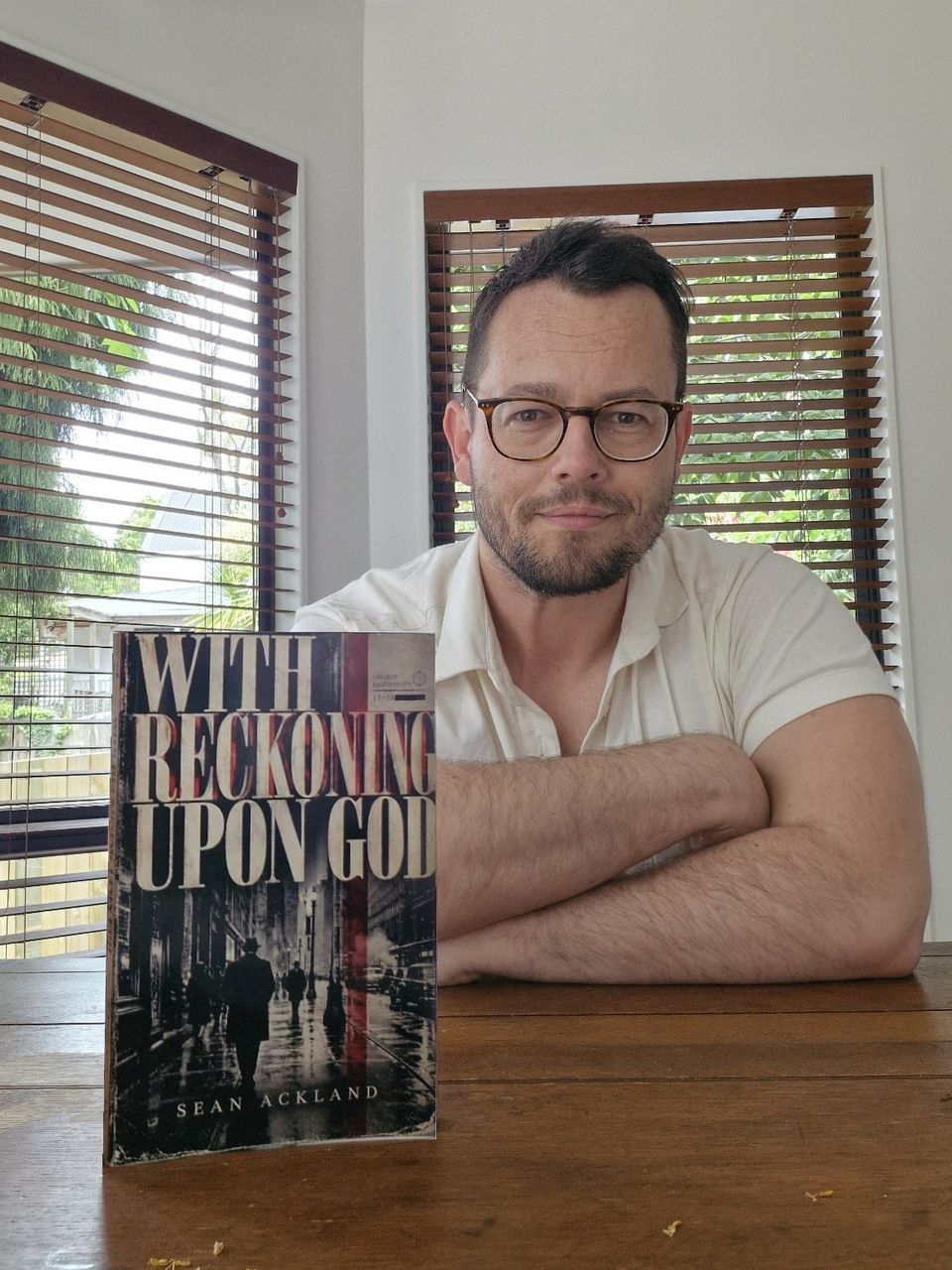
Now, when I set out to write this book, which, yes, on the surface is not overtly political, it wasn't with the intention of making a political statement, although a story set in a post-slavery America, you can't really avoid that.
However, during the editing process, you realise that, whether subconsciously or not, your own politics do find a way to integrate themselves into your work.
I think it's unavoidable.
SP: Which came first, writing fiction or commenting on politics?
That is very, very hard to answer because I've always felt the two have been integrated. As far back as I remember, it's always been a little bit of both.
I used to read The Listener even as a small child. My dad used to buy it, and I would read it because it had a TV guide at the end, as well as movie reviews that preceded the TV guide section.
So during my formative years, I would read the TV guide to see if, you know, something like Batman was on that week. And then I would read the movie reviews that preceded the TV guide. And then before the movie reviews, it would be the culture section, and then before the culture section, you'd have the politics section.
And gradually, you kind of make your way back through the actual Listener, and you start getting interested in those things. It's a gradual process.
So, to answer your question, the answer is probably fiction, because that was what kind of drew me in.
However, because of the media that was presented to me at the time, in the form of something as mundane as my dad picking up The Listener, it introduced me to politics far earlier than it otherwise would have.
Which I also think goes to show the value of print media. Because everything now is so dictated by algorithms that are set to our tastes, they keep us locked into the spaces we're already interested in and keep us from venturing out into spaces that we also may be interested in.
I remember when I finished school, I had two pursuits that I wanted to pursue. I wanted to get into either making movies, specifically writing screenplays, or journalism. Those were my two options.
Now, this was in 2008, when people were talking about how print media was on the way out. Journalism was being described as a dying industry, so that very much dissuaded me from pursuing it.
Little did we know that we would have this big burst of independent media reporting that we see today. In hindsight, I probably could have been writing a lot earlier than what I'm writing now.
I was dissuaded from getting into movies basically because the first thing they'll tell you is that unless you have somebody in the industry who can help get you in, it's probably not going to happen. And so I decided on taking the safe bet, which was teaching.
Which, when you look at how that sector has been targeted by consecutive governments and undermined by consecutive governments, it turned out that back in 2008, the option I chose, which I thought was the safest, turned out to be the least safe.
SP: Can you tell us a bit about your two books? I see the first, The Genison Cavalry, is currently the highest-rated title on RealNZBooks as well as the highest-selling Sci-Fi and Young Adult title. Your second book, With Reckoning Upon God, was just released, right?
S: To be honest, I can probably explain why The Genison Cavalry is the highest-rated title. I had an inherent advantage being a teacher. I wrote a novel that 13 or 14-year-old Sean would have wanted to pick up and read. And I was, at the time, teaching at an all-boys school where I had many 13 to 14-year-old boys to market towards. And a lot of their parents were kind enough to purchase them titles, if not more so out of curiosity to see whether or not it was probably good.
I'm glad to see that, given the high ratings of the title on the website, many did enjoy it.
But I did probably have an inherent advantage of having the demographic pool in front of me every day when I showed up to work.
Yeah, I recently finished editing With Reckoning Upon God. In fact, it is currently on Goodreads. However, I haven't begun marketing it in earnest yet, mainly because I've been so busy with my political commentating, and also I don't want to launch the book when people are so focused on the election.
So yeah, I guess this is something of a soft launch for the title. I plan on marketing it a bit differently. When I write, it's not for the purpose of making money. I'm a big believer that every adult should have a hobby that is done without the intention of making any money. And writing fiction is that for me.
So it's very likely that although I will put it out there for people to purchase a physical copy from Lulu.com, where I self-published it, I'll also be putting chapters up weekly for free on my Substack.
And I'll make sure that it's at the nearest public library if people want to read it.
SP: Do you see any themes in your books playing out in New Zealand politics right now?
S: Well, the villain of The Genison Cavalry is an egocentric, Machiavellian cult leader who is cultivating a following of aggrieved former Confederates, united by their determination to force an alien civilisation to assimilate into their own worldview.
So you tell me.
SP: Why do you do what you do? What keeps you going when the news cycle is exhausting?
S:That is an interesting question. To be honest, it doesn't exhaust me. In fact, quite the opposite. It energises me. I think, you know, there are a lot of people who see the constant barrage of bad news just coming at them day after day, and they just feel this kind of very justified need to turn it off or separate themselves from it. And I certainly understand. For me, though, whereas for other people it triggers their flight or freeze response, for me it triggers my fight response.
And I think that just comes down to who I am as a person. Like I said, I started reading the politics section of The Listener when I was nine years old. This stuff is something that I live and breathe. So it's no more exhausting to me than it would be for anybody else whose passion may lie elsewhere.
Also, just in terms of my personality type, I am somebody who's probably a lot more comfortable with confrontation than others. I like a good fight, and I like putting up a good fight.
SP: You’ve been open about being angry at the state of things. What do you want people to do with that anger?
S: The first thing I want them to do with that anger is I want them to find it.
Because although I have been open about being angry at the state of things, to be honest, I don't think I've been angry enough. But I've certainly been angrier than most.
When people ask me, "Sean, why are you so angry?" my question back to them is, "Why are you not?"
How can you find out about a story from a couple of weeks ago where you're seeing chemotherapy treatment delayed for children because they don't have enough nurses on staff because this government instituted a hiring freeze?
How does that not make you angry? Why are you not screaming at the sky over that?
SP: With the election this Saturday, what issue do you think isn’t getting enough attention?
S: That's an easy one. I don't think it's getting enough attention that if this government wins, it's likely going to be by a very small amount. And the amount that they win by will probably be the difference of the voters that they disenfranchised by eliminating same-day enrolment. I think if they had kept same-day enrolment, as they had done two elections prior, this election would be a foregone conclusion. I think the left would win it no problem, and it wouldn't even be close. The fact that it is close is because they have eliminated same-day enrolment. That's what I don't think is getting enough attention.
SP: You’ve argued that young voters could decide this election. What would you say to a first-time voter who thinks their vote won’t change anything?
My answer to the voters who think their vote can't change anything is that, just by virtue of the fact that this election is going to come down to the wire, that shows that your vote very well may change things. But also, I've got to be honest, demographically I'm talking to an audience of one, and that is young men. Young men are not showing up in the way that their female contemporaries are. When people say that there aren't enough young people enrolling, look at the demographics. It's young men who are not enrolling.
And ironically enough, in my experience, it has also been young men who have the most opinions on these matters. Who are the first to complain when they have to wait for six hours at a hospital. Who are the first to complain about where their tax dollars are going. And when you talk to these guys, they'll always tell you. It's not that they don't think their vote will make a difference. It's, "What's the point? All politicians are the same anyway."
That is an answer that drives me nuts.
Because although the opposing side is not perfect, they are not the same as this government. And to me, I find it to be the stupid person's idea of a smart person's argument, to be blunt.
SP: You’ve criticised commentators for chasing outrage and audience approval. How do you avoid falling into that trap yourself?
S: I haven't necessarily criticised commentators for chasing outrage or audience approval. It's been because they say silly things, and I think it's fun to clown on them. Although I don't do that as much anymore because when you look at the state of this country, you start to realise that there are bigger fish to fry than those guys.
How do I avoid falling into that trap myself? It's very easy.
People follow me for my perspective. People follow me for my honest takes.
So I give them my perspective and I give them my honest takes. It works in my favour to not fall into that trap.
SP: Things seem very heated, and some would argue dire, for a lot of the country. What are you doing to switch off? How are you managing to add whimsy into your life?
S:To answer your question of what I do to switch off, I try, I don't always succeed, to, after putting the kids to bed, calm down and sit with my wife. We usually watch a movie or a TV show. And a little rule that I have, that I admittedly break quite often, is I leave my phone to the side to charge and try not to pick it up. Although it is hard.
SP: You co-host The Collective. How did that start, and how do the podcast and the books feed into each other?
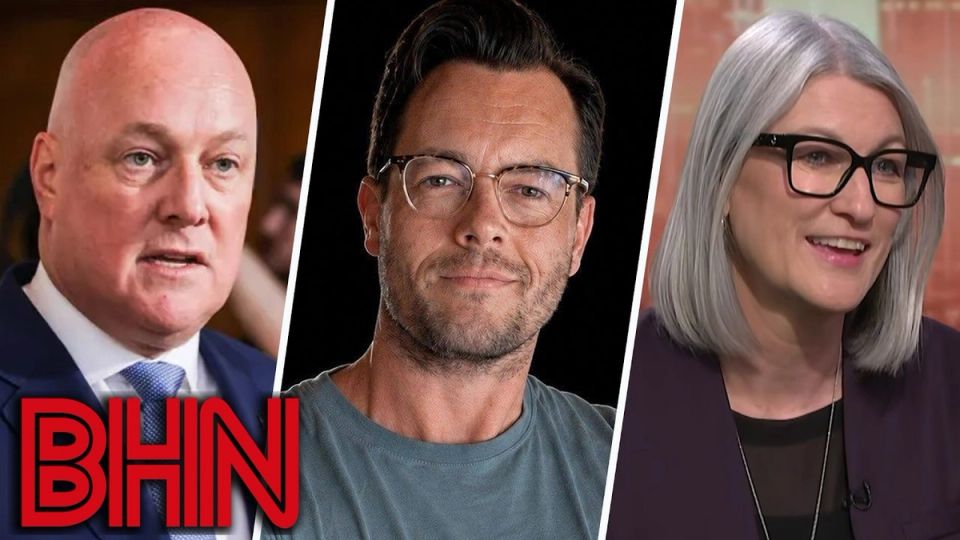
S: So The Collective was an idea of Pat Brittenden, who founded the Big Hairy Network, where The Collective is on.
Although I don't want to speak for Pat, I get the sense the idea came after his co-host Chewy took time off and he had consecutive guest hosts come in, among them myself, Paul Barlow, Jordan Rivers and Bree Kerry, my other co-hosts of The Collective.
I think he liked how those episodes went, and he wanted to give us another platform to continue the project that he has going on there at the Big Hairy Network. By the way, shout-out to them. I think they're the best news organisation in New Zealand.
SP: Whatever happens on Saturday, what comes next for you, and what do you hope readers and listeners take away from your work?
S: I've got a sneaky suspicion that my job isn't going to end after Saturday.
I think negotiations are going to be going a while. I'm not optimistic that this is going to be done before Christmas, in fact. Chances are you are still going to be seeing a lot more of me and my work over the coming months. Although, if it was up to me, the answer to your question would be rest.
In terms of what listeners take away from my work, I hope they find themselves more knowledgeable and more mobilised. I feel like my role is to validate feelings that they have that they don't know how to put into words.
A lot of kind people have come up to me and said that what they're feeling, they don't know how to put into words, but that I put words to their thoughts, and that they're very grateful for that.
So that's what I hope to give. I hope that that's what my listeners get, that I put words to their feelings and thoughts on this coalition.