Writing SMUT Abroad Part Three: Finding the Creative Muse
In this exclusive series for Sans Pareil Online, Emily Makere Broadmore, editor/PR-stunt-woman/SMUT-editor-extraordinaire, is off to Europe. Here she's promoting the illustrious Folly Journal, creating magic at a writer's residency and probably a thousand other things we're deeply jealous of.
4 min read
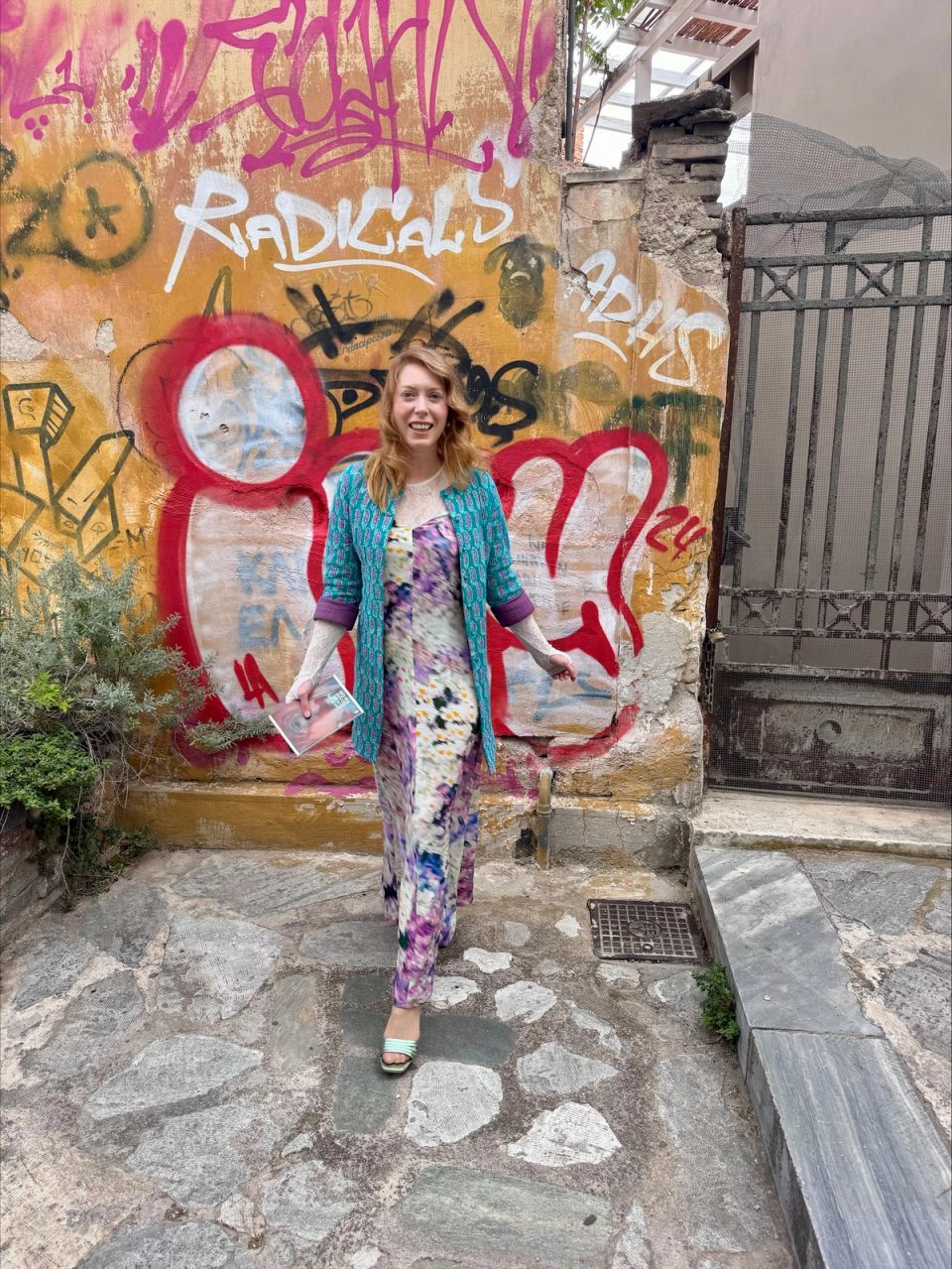
So far I have written most of my new material for what I have been referring to as ‘my sex novel’ by hand, scribbling in the back of Ubers, at coffee shops, stopping on street corners. Or, today, as I did over a glass of wine at lunch, dictating directly into my phone a conversational scene between my protagonist and her husband, which I then emailed to myself for editing later. As a writer, I feel rather guilty when I return to the residency to find the Bulgarian still in her pajama pants in the same place I left her that morning, cutting up tiny bits of paper and drawing millions of tiny ink dots all over them. Writing, as an artform, is one of the most achievable and flexible there is.
This is the reason so many people pick up a pen, but that doesn’t mean writing well comes easily. One of the new arrivals from America is also a writer. ‘Sometimes,’ she says, ‘I just sit and think for days then I have a productive burst for two hours.’ The editing stage, which is where I am at, is where the plot holes need to be resolved, timeframes ironed out and all the promises made to the reader fulfilled. It’s often a frustrating task, less about the flow than about filling holes within a crafted story that was written like a fever dream.
Not all writers write like this. I am what is considered in the writing world a ‘panster’, as in, I write from ‘the seat of my pants’. I tried to be a plotter once, and it killed the creativity. Part of the art, for me, is to start typing and see where I end up.
One of the painters points out that she paints this way too. ‘My mum is always
saying, hurry up and finish that painting, but it doesn’t work like that. The vibe has to be there.’
‘The energy,’ I say. ‘The energy has to be right.’
Maybe, I ponder, writing isn’t all that different as an art form – it’s just often more portable. By this point I am on to my last fifty pages, reading Ask me by Deepa Paul, whom I was on a panel with the previous weekend in Madrid at the European Writers Salon, and some filth by Georges Bataille that I am amazed wasn’t banned in the 1930’s. Some writers don’t read other people’s books while they are working on their own, but I find myself selecting books to read as a way to goad myself into pushing my self-censor aside. If Georges Bataille can write about teenagers fucking and pissing on each other, and Paul can write about fucking strangers she met on Tinder, then this section about rimming is totally ok, I think to myself.
I forge on.
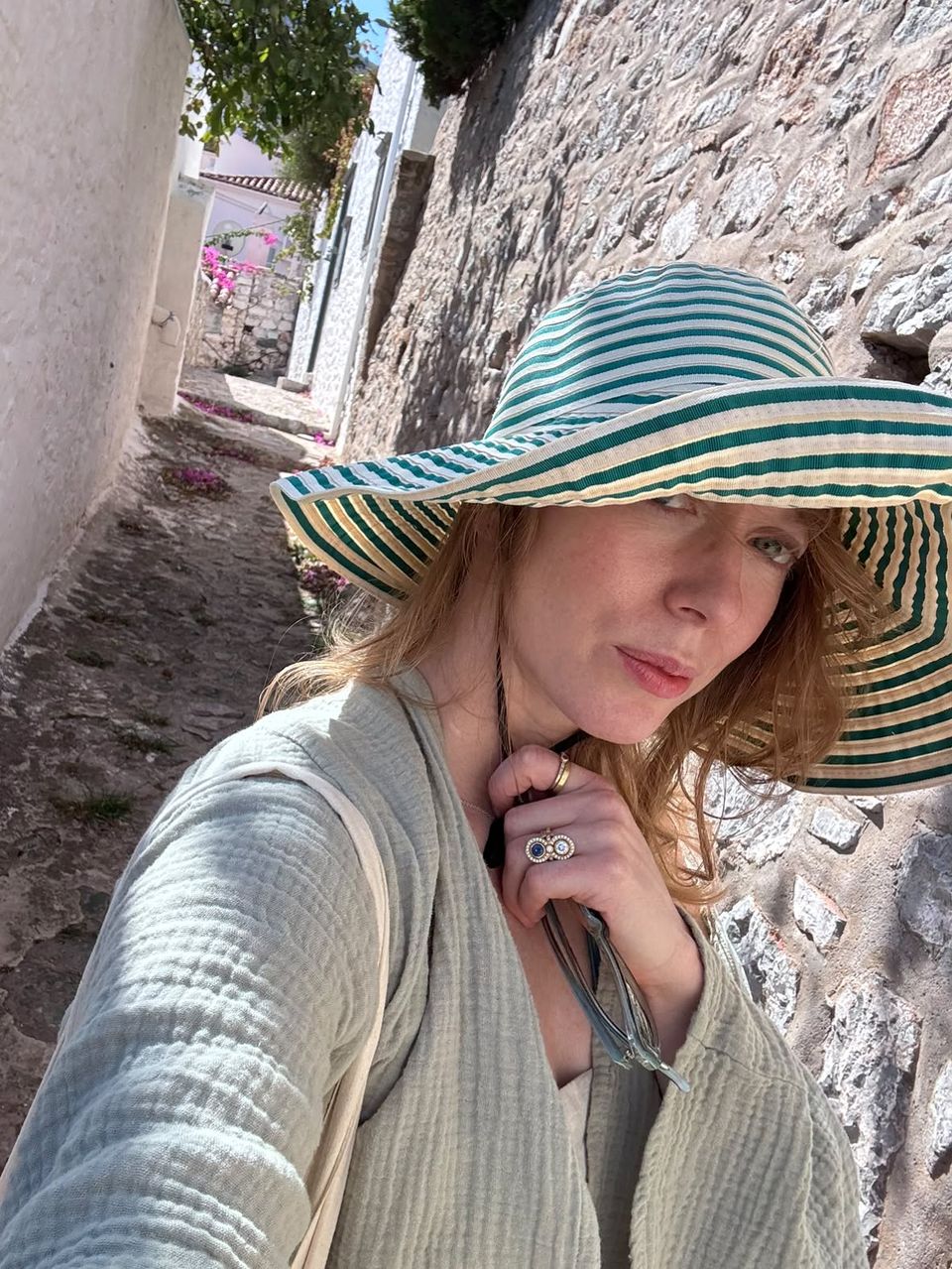
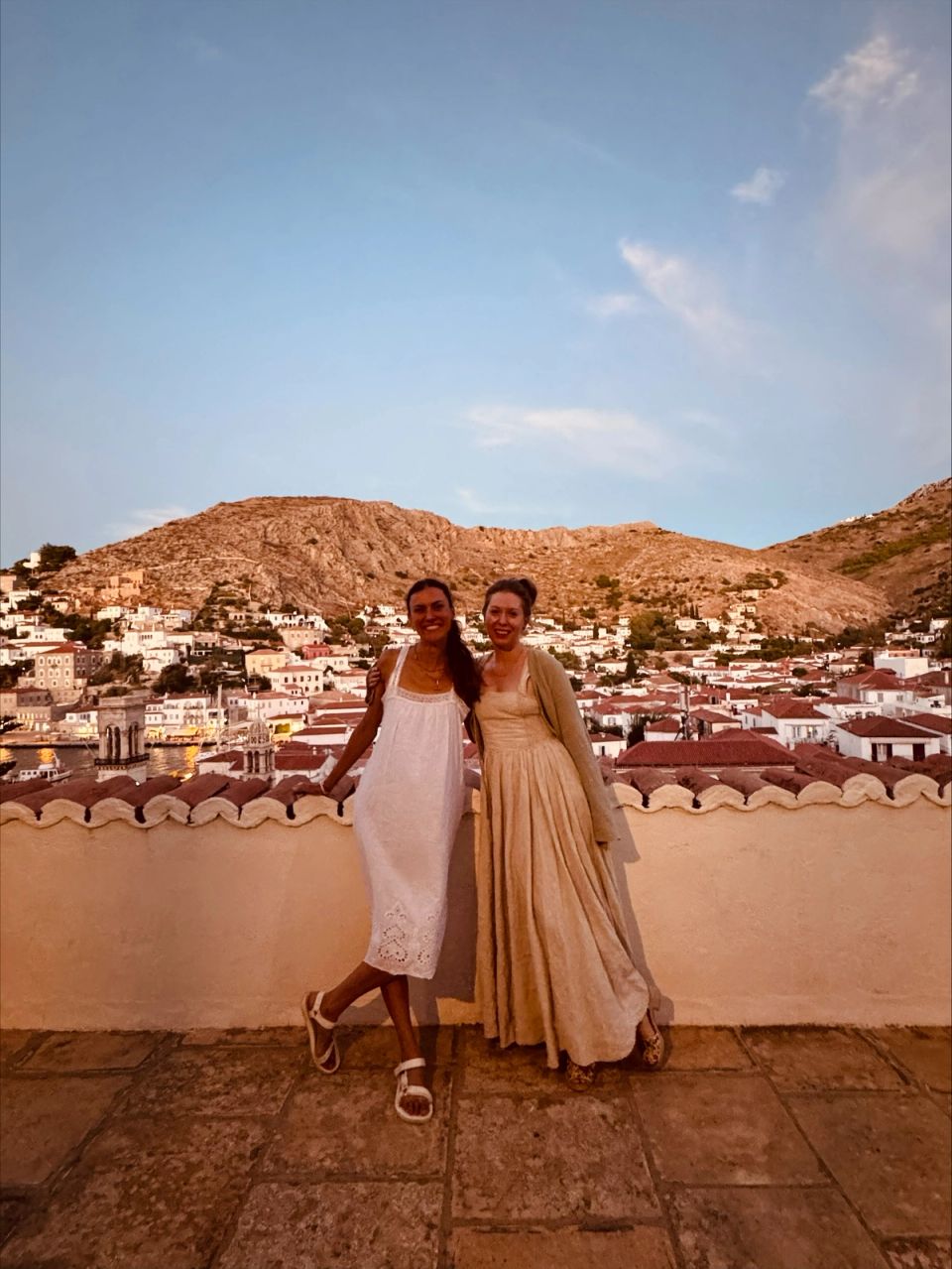
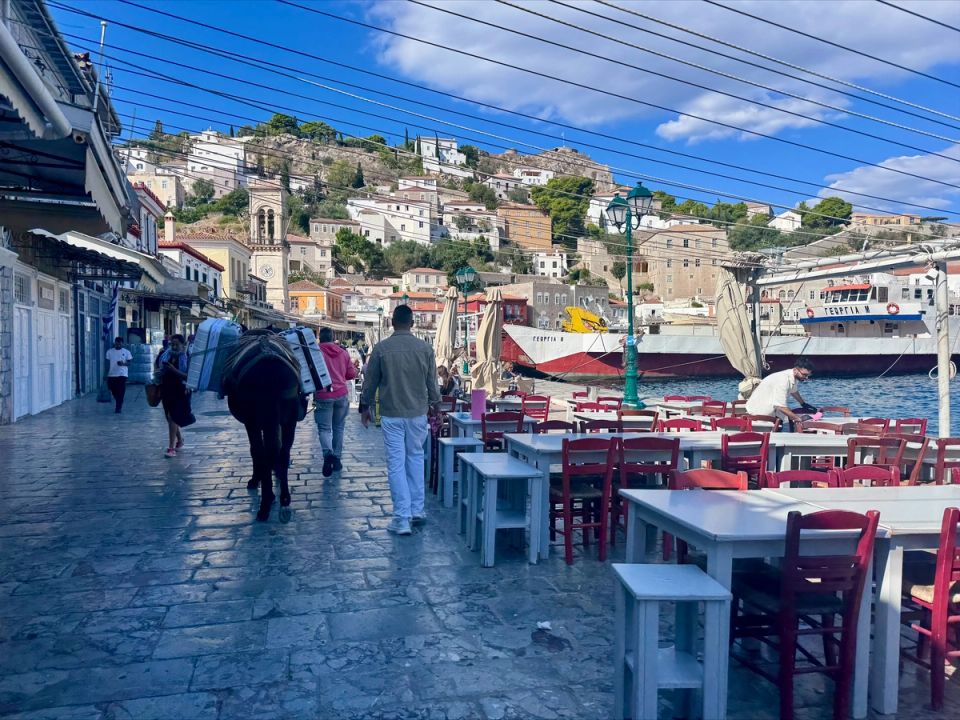
It is at this point in my residency that I had planned to take myself to Hydra, a small Greek island an hour away by boat, for a weekend. It has a literary history, this island, with Leonard Cohen and a plethora of artists who found its shores in the 1960’s. They would write all morning, and drink at the port all afternoon, apparently. I make my way there (after several days of ferry cancellations due to extreme gusts) and discover why exactly this settlement is magical. The Bulgarian and Canadian went for a day, got so drunk in the sun they ended up staying overnight. I want to live there, the Bulgarian tells me when I message her from the ferry to let her know where I am going. Have fuuuun!
There are no vehicles, only donkeys, and I find the Hydra Book Club which is run by a friend of a friend I met in Madrid the previous weekend. The island has its own literary journal, Glotta, a curious curation beautifully produced as an almost in joke for the literary types that call Hydra theirs. I find the editor on Instagram and meet him for a drink at 11pm at night at Americano, a bar down a cobbled lane where we spend an hour discussing what publishing actually is; a freight and logistics business.
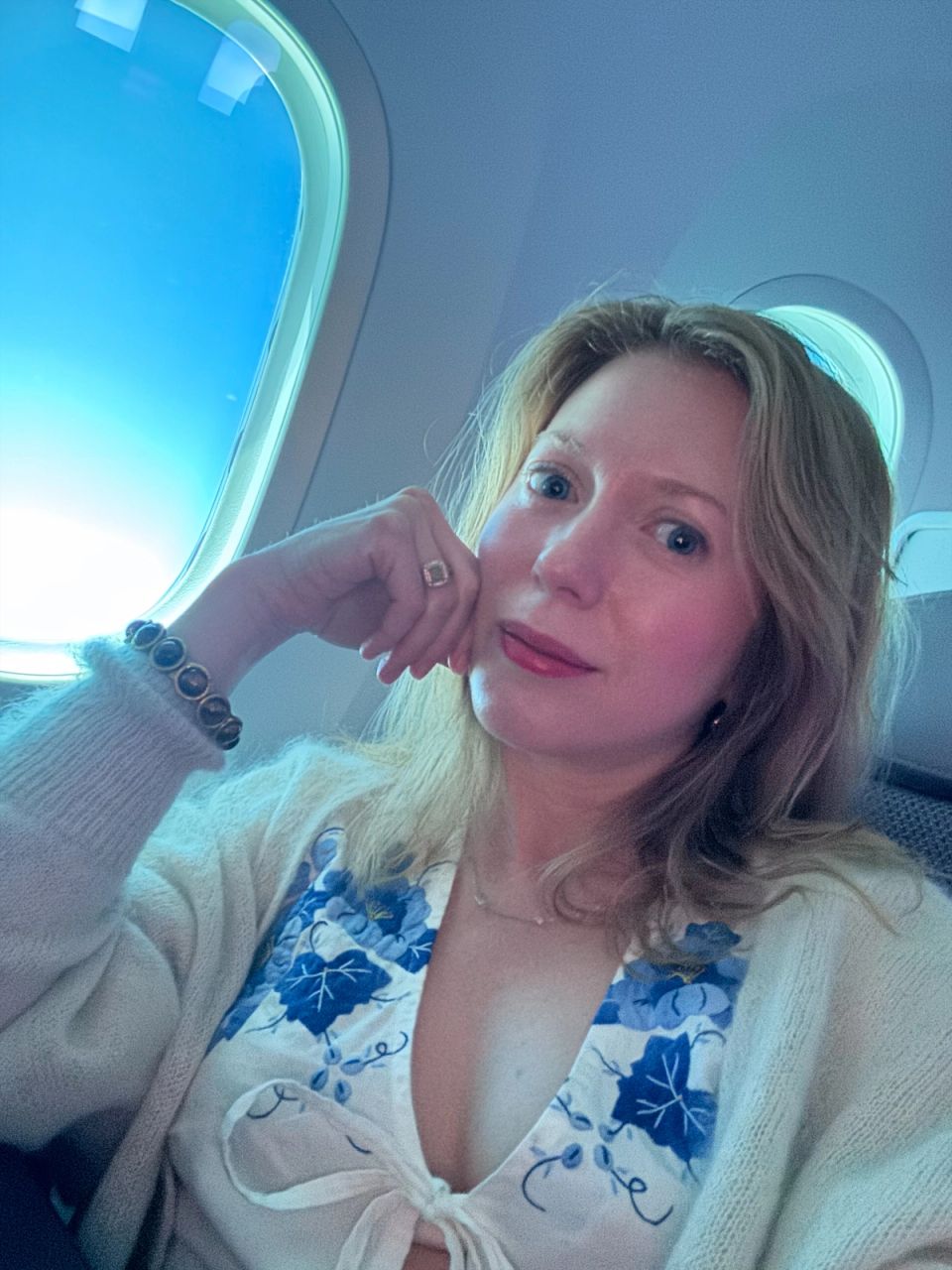
It is true this island inspires the muse, with the light almost as clear as New Zealand skies and the lack of clear modernity. So far I have written most of my new material by hand, scribbling in the back of Ubers, at coffee shops, stopping on street corners. Today I settle into a comfortable deep armchair along the small bustling harbour of Hydra with a glass of wine, dictating directly into my phone a conversational scene between my protagonist and her husband, which I then emailed to myself for editing later. For the fun is hot, the air is thick with salt and all I wish to do is gaze into the ocean and ideate the next scene of my novel in my head. As a writer, I feel rather guilty when I return to the residency to find the Bulgarian still in her pajama pants in the same place I left her cutting up tiny bits of paper and drawing millions of tiny ink dots all over them. Writing, as an artform, is one of the most achievable and flexible there is.
This is the reason so many people pick up a pen.