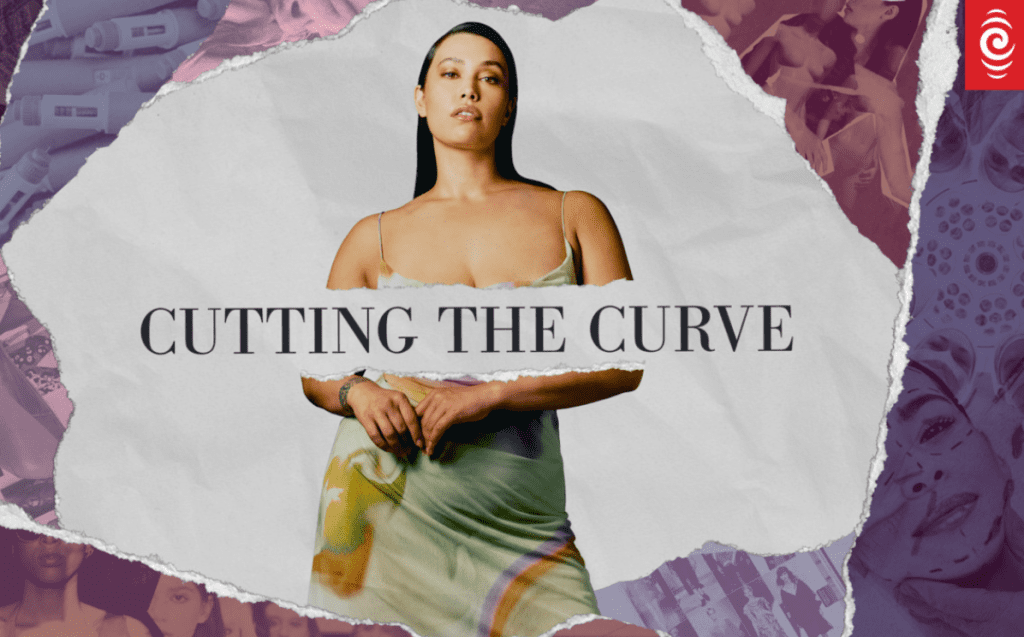
Cutting the Curve is a fearless new documentary series that confronts fashion’s backlash against body diversity. In an age of Ozempic bodies and token inclusion, curve and plus-size women share raw, unfiltered stories of visibility, rejection, and resilience. At its heart is Samoan New Zealand opera singer-turned-model Isabella Moore, who refuses to shrink to fit. Following her journey through New Zealand, London, and New York, the series exposes what it really costs to be visible only when profitable—and why genuine inclusion must be more than a passing trend.
Streaming on rnz.co.nz/video from 25 August 2025.
Sans Pareil sat down with the star of the series, Kiwi model Isabella Moore and producer Evelyn Ebrey to talk about the series and the impact of diet culture, Ozempic and the slide back to a heroin-chic fashion industry.
SP: Hi Evelyn and Bella. I’m so glad to be chatting to you! And congratulations to you both. I can’t wait to see Cutting the Curve.
For our readers, Evelyn, can you tell us about the concept, and how you and director Julia Parnell became partners on this project?
Evelyn: In July 2022, I published an article while I was still editor of FashioNZ titled ‘Why plus size models are not a trend’ which discussed the progress made in the visibility of plus size fashion and why size inclusivity in clothing matters so much. While it was 5000 words, I knew there was a lot more to say and I decided to see if I could make it into a documentary. I reconnected with filmmaker Julia Parnell via WIFT and pitched her the idea. She had also been wanting to make a fashion documentary and was interested in developing it through her production company Notable Pictures. Julia has been a celebrated documentary director and producer for over 25 years and brought a huge amount of knowledge and talent to the project. It was her connections with Doc Edge and RNZ that helped get it in front of the right people and start gaining momentum.
The story has evolved a lot since we first started developing it and we finally got the series picked up and fully funded by RNZ in late 2024, they have been incredibly supportive since we first pitched it to them as an idea. RNZ’s now former Head of Content Megan Whelan, was particularly passionate about getting it made and was a great sounding board throughout the process. Early on, we added Creative Producer Sammy Salsa, Creative Consultant Dan Ahwa and Director of Photography Jason Crane to the team. They have been integral to the series and helped us further develop the story ideas and beautiful visual style you see on screen. Julia really welcomed the opportunity that fashion offers to push the boundaries visually and she came up with some really creative ideas that elevate the style of the series while exploring the emotional truths of the narrative. So many people have commented on how beautiful the episodes look and that is a testament to the exceptional talent that Julia and Jason have behind the camera.
SP: What brought Bella on as the central focus?
Evelyn: Julia and I knew that the best way to tell the story in a relatable way would be to centre it around someone experiencing the issues we’re talking about in the series. I had interviewed Bella a couple of times already, including for the plus size models article and for another documentary, and I knew that she was wonderful on camera and great to work with. She was interested from the beginning about sharing her story with us and we’re so grateful that she agreed to come on the journey of making Cutting the Curve.
We put Bella through quite a lot in the sense that we interviewed her extensively several times, both on camera and off, and filmed some personal scenes with her alongside following her around for weeks at a time. But she was up for whatever we asked from her and I’m so proud of how she showed up as her authentic self on camera, and is really open and vulnerable in a way that I feel will really relate to viewers. In person, she’s also funny and a bit of a goofball, and while we don’t see much of that side of her in the series, I think we get the essence of her personality otherwise.
SP: Who do you think a documentary like this is so important right now?
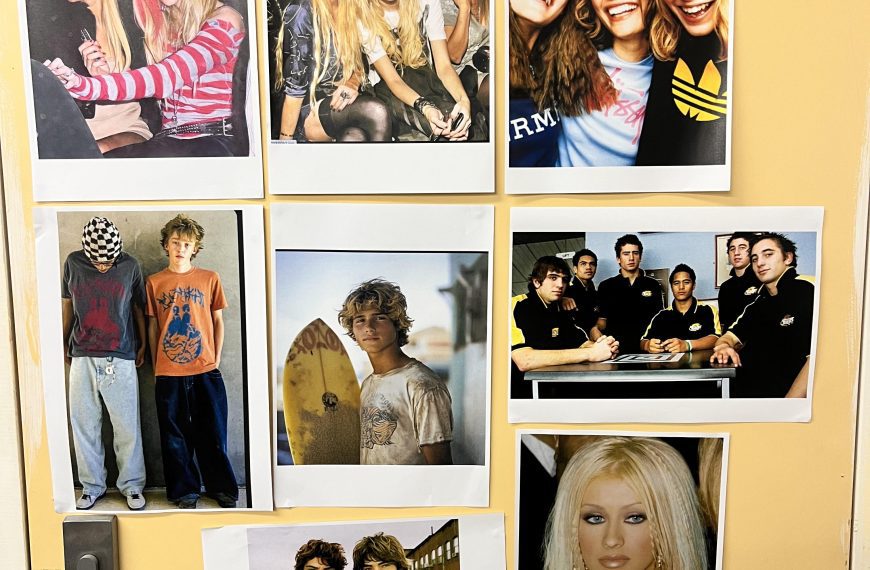
Evelyn: It’s been quite a strange experience that the documentary we thought that we would make in 2022 is completely different from the documentary we have made. In the sense that we were still riding a wave of positivity about being inclusive then, and now there has been a noticeable regression in both the visibility of plus size models and inclusive sizing in fashion. There’s a number of reasons for that, including the huge popularity of weight-loss drugs like Ozempic, the rise of conservative politics, which brings with it a focus on controlling women’s bodies and the return of Y2K fashion, which was a problematic time when the focus was on very thin bodies.
Fashion and pop culture has recently been celebrating thinness again in a way that is so infuriating for those of us who lived through the damage it caused on women’s body image the first time around. We must not go backwards, especially for the sake of all the girls and women of future generations. Everyone has a right to buy clothes that fit them and that they feel good in, that this is still an issue and fatphobia is still a thing in 2025 boggles me.
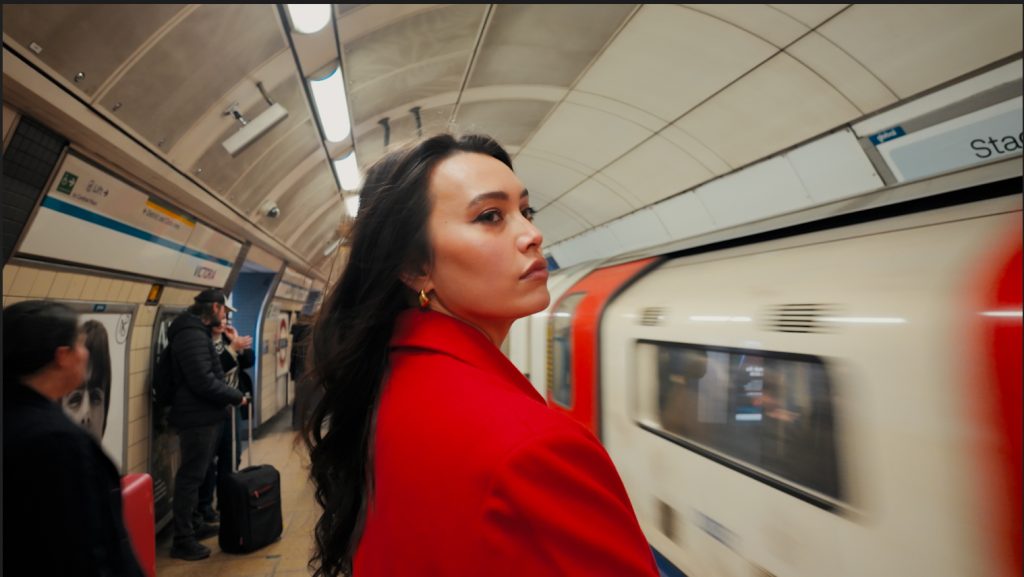
Pictured: Isabella Moore in London.
SP: Bella, you are one of Aotearoa’s most successful models. What is it like for you making the leap to being on film?
Bella: Oh, thank you! Haha. I’ve done a lot of videography work and TVCs for campaigns, but I’ve never been interviewed this much-or had such deep, vulnerable moments captured on camera. I’m generally an open book, but it’s a whole different experience when you’re sharing your story on film for the world to see.
To be completely honest, I’ve never been a fan of interviews (I’m a writer and/or a singer, not a speaker, haha!)-I worry about being misunderstood or accidentally hurting someone’s feelings. But through this process, I’ve learned that it’s not my responsibility to control how others interpret my words; all I can do is speak my truth and share my story.
So yes, it was a real leap for me-totally scary and outside my comfort zone-but I have absolutely no regrets. The messages in Cutting the Curve are far too important not to share.
How did you find being followed around with a camera? Especially with such a raw look into your inner world?
Bella: Being in front of the camera as a model is something I’m very comfortable with, but switching off “model mode” and just being me was definitely a challenge. When I model, I treat it like a performance but the documentary requires me to drop the act and simply show up as my authentic self, as just Isabella.
I loved sharing the highlights of my life, but letting people see the more private or raw moments-moments of self-doubt or when I wasn’t booking work-was much harder. I had to fight hard against imposter syndrome and the fear of being judged, especially since I used to tie so much of my worth to success. It was triggering to show my low moments, but the truth is, that’s reality-and I know many people will relate.
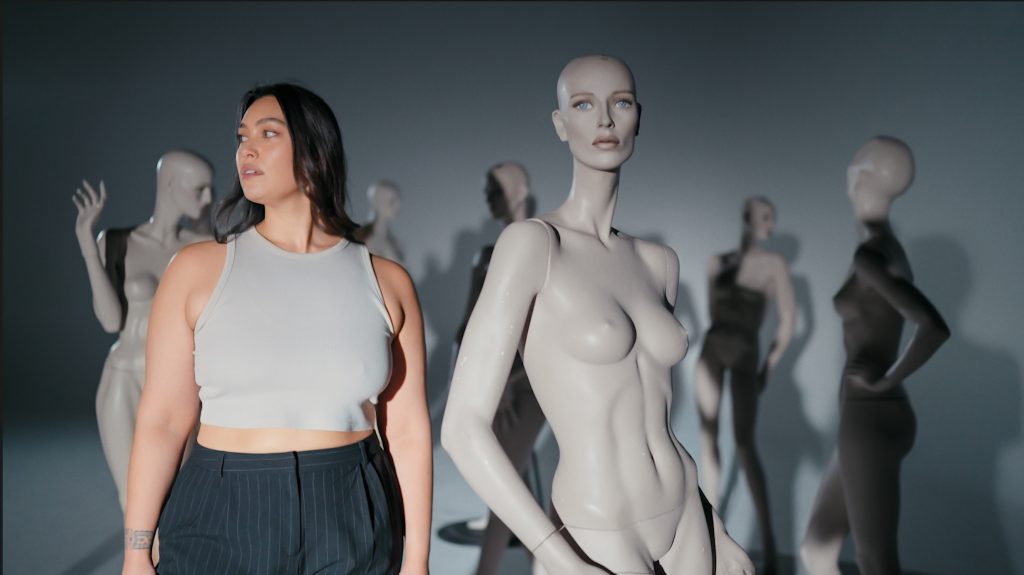
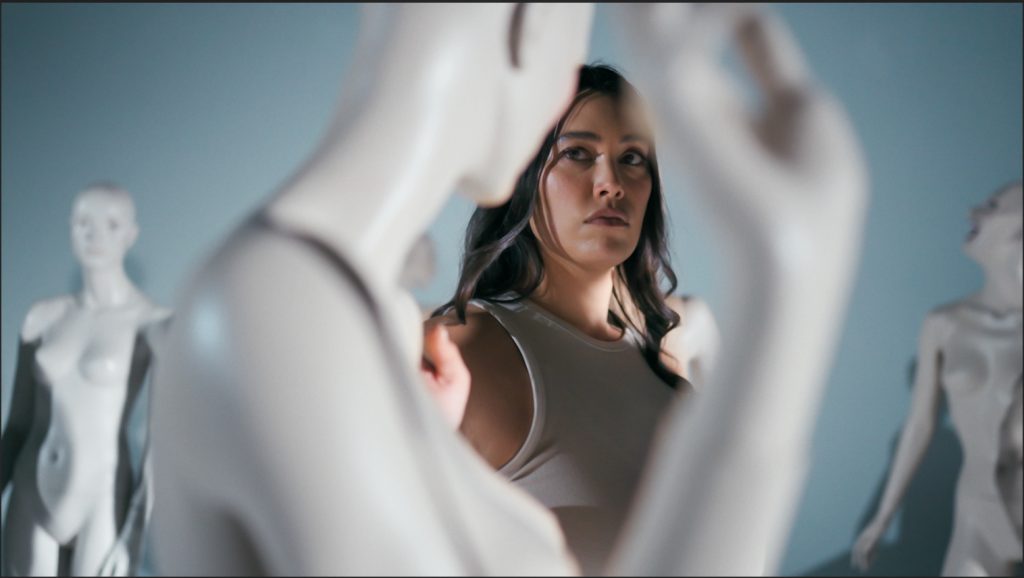
Pictured: Isabella Moore.
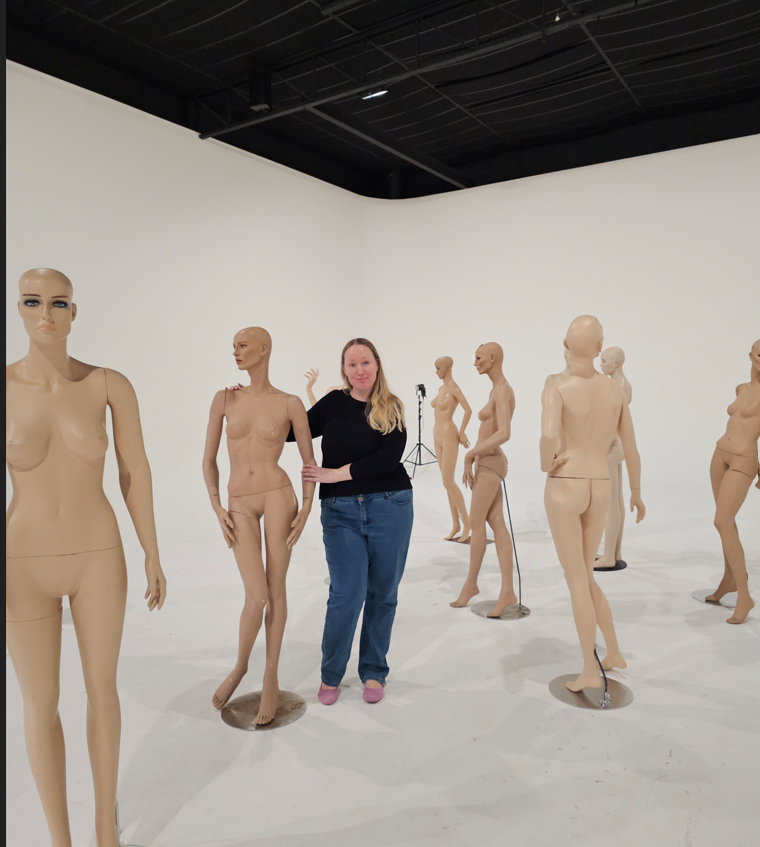
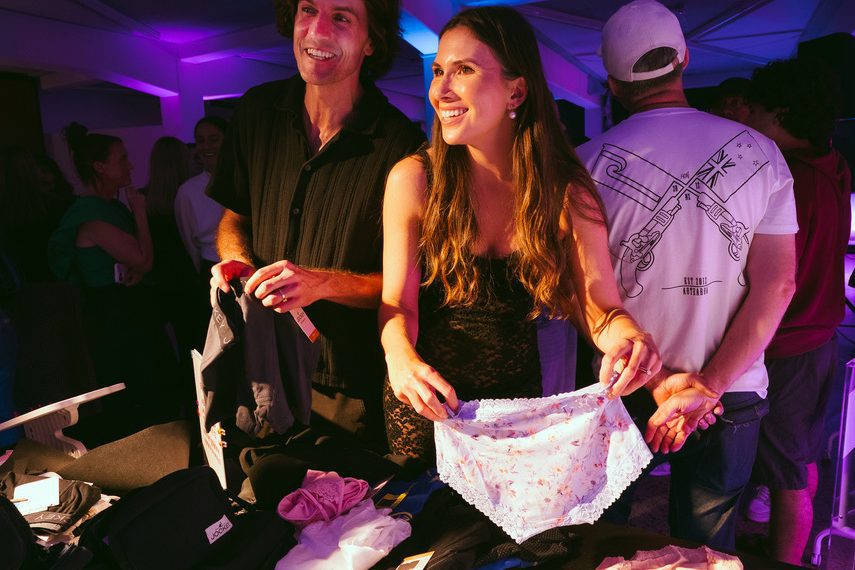
Pictured: Evelyn Ebrey.
Bella, you were an opera singer before a model. That’s pretty incredible! I believe you’re retired now? What made you switch to modeling, and now that you’re in Europe will you start singing again?
Bella: Thank you! I absolutely love opera-singing has always been such a joy for me. I still keep it up, but these days modelling takes up most of my time. I thought it would be easier to balance the two, but modelling is often very last-minute while opera is planned years in advance, so it hasn’t been as simple as I hoped.
I studied opera full-time from 2009 to 2018, and after finishing, the natural next step was to audition for young artist programmes (YAP)-essentially paid internships with opera companies. After a string of unsuccessful auditions in the US, I decided to head home to Aotearoa to take some time out. But instead of downtime, I found myself modelling full-time through my agency, Unique Model Management.
2019 was an incredible year for plus-size modelling and the body positivity movement-opportunities really opened up. I signed with IMG Sydney, built my portfolio, and by September I was off to London, where I signed with MiLK Management.
In many ways, modelling saved me. Not getting into a YAP had really crushed my confidence, and I felt lost. Modelling arrived at the perfect time and gave me back a sense of purpose. Like opera, it’s a form of performance and creative expression-just in a different world.
Now that I’m in Europe, there are so many opportunities to return to the stage. Balancing both careers is still a challenge, but I’ve already had some incredible experiences-including singing twice at Westminster Abbey for the Commonwealth Day service, which was such an honour. The next goal is to step onto a few opera house stages here in the UK and beyond.
Speaking of Europe. How are you finding being based in London? How does it compare to NZ?
Bella: London has really become my home away from home, and I do love it here. When I arrived in 2019, the fashion industry felt so open-I was working within the first couple weeks and the jobs just kept on coming. It was such a hopeful time. Things feel quite different now. There’s less work, and some of the brands I used to work with regularly have stopped booking models above a size NZ 12 to represent curve or plus-size.
In that sense, it feels like the industry here has taken a step backwards. I’m really proud of what’s happening back home in Aotearoa though-the fashion scene there is truly celebrating diverse beauty and offering a much more accurate reflection of the society we actually live in. I’m living for Maori and Pasifika creatives, models, and industry people taking up space in fashion.
How do you feel with the ‘plus size’ label on models? I remember a few years ago there was a movement to ‘drop the plus’ but that doesn’t seem to have happened. It’s always interesting that most plus size models aren’t even considered ‘a bigger build’ in common society.
Bella: Dropping the “plus” would be the ideal outcome, but it’s still used in the industry. Early on, I actually used the term as a kind of shield-if I called myself a “plus-size model,” I’d see less surprised reactions from people, especially when I didn’t fit their narrow idea of what a “model” should look like.
To really drop the label, we’d need to see a genuine shift towards true body diversity and acceptance, with more brands offering extended sizing so that the term becomes unnecessary.
These days, I use “plus-size” more out of habit, but also with pride. What once felt like a defence mechanism now feels like a way to stand tall in who I am. And yes, you’re right-in fashion, the definition of “plus-size” doesn’t always align with how common society sees body size. In this industry, it can mean anything above a size 8, though now there are sub-categories like mid-size and curve. So while the terminology can be confusing, I’ve come to a place where I no longer see it as negative.
Evelyn, what made you head to the UK to film part of this series. Why did you decide London Fashion Week was the place to be?
E: This always felt like an international story as well as a local story, particularly because the themes in it to do with body image, inclusivity and cultural identity are global. We wanted to film at London Fashion Week for a couple of reasons, firstly because we were hoping to capture the excitement and drama of it, by following Bella to castings and if she was cast in a show etc. Also, because we wanted to connect with plus size model, author and activist Felicity Hayward, as she has been covering the inclusion of plus size models at fashion weeks for a few years now through her platform Including the Curve.
Fortunately, she agreed to be part of the series, and interviewing her in London was one of my favourite interviews I’ve done to date. She was such a joy to talk with and kindly let us follow her to the Sinéad O’Dwyer show at LFW. What we weren’t expecting was for the number of plus size models on the runway to drop by half that season which was really disheartening but also confirmed what we had suspected was happening with the regression.
Was there anything surprising either of you found out or came across during the making, that you weren’t expecting?
Evelyn: It was definitely eye-opening how much the popularity of both Ozempic and SkinnyTok exploded while we were making this series. The Manhattan doctor we interviewed estimated that 1 in 3 people were taking Ozempic in his area of New York where it’s also advertised everywhere. With the arrival of Wegovy in Aotearoa recently, we’re starting to see it advertised here now too. At the same time, there is a really noticeable focus on not just thin, but skinny again, which is concerning. While we understand that everything is cyclical and fashion is always changing, we’ve come too far for us to regress to these harmful old beauty standards.
Bella: I second what Evelyn has said. I went into this thinking that society had shifted more into body acceptance, but then Ozempic and other weight-loss drugs became more widely accessible. All of a sudden, people I never imagined-celebs, curve models, public figures, even acquaintances-appeared to be taking it. What has shocked me is the sheer number of people that are happy and willing to risk their bodies and their health purely in the pursuit of being skinny. Your body, your choice ALWAYS-but when that choice is being led by internalized fat phobia and outdated beauty standards not of your own making… Is it really YOUR choice?
I know Ozempic features in the documentary. What are your views on it and how do you think it’s influenced the fashion world?
Evelyn: It’s a complex topic because it has legitimately helped people with diabetes and other health issues, no-one is denying that it has a place in healthcare but at the same time it’s also being used by people who don’t need it to get thin at any cost. When already thin people are using it to get thinner, that’s a problem. It’s also something we don’t know the long term effects of yet and with some of the serious side effects it has, I would question why anyone who doesn’t really need it would take it.
Bella: I think it’s really important to remember that GLP-1 drugs like Ozempic were made for people with genuine health needs-not as a quick fix for cosmetic reasons. Of course, everyone has the right to make their own choices about their body, but for me, health should always be the priority and I don’t believe a person’s aesthetics can tell you whether they’re healthy or not.
In saying that, models-including myself-have felt the pressure to take GLP-1 drugs in order to stay relevant and working in fashion now that ‘skinny is back’. I’ve felt that fear and worried that if I don’t ‘fit’ a certain size, my modelling career and livelihood would be jeopardised. When we don’t see our bodies represented in the media, we don’t feel welcome; we feel othered. And right now, the fashion industry and the influence of these drugs are doing that.
Why do you think fashion and the media keep going back to thin as a beauty standard?
Evelyn: I think it’s so deeply ingrained in our culture as a society, it’s so normalised that fat is the worst thing you could possibly be, which is messed up. We have all internalised messages of fatphobia since we were really young and that our bodies were something to be fixed or changed to fit a ridiculous beauty standard of thin and white. Fashion has perpetuated that to sell clothing and there are still clearly a lot of people in fashion who think thin is the only acceptable way to be.
Bella: It always has. I don’t think we have ever truly broken away from it.
The fashion industry, as it stands, is still led by people who know how to do ‘thin’, and either don’t know how to do anything else or are too scared to make changes for fear of failure-that’s what I think anyway.
I also agree with what Evelyn has said: internalised fat phobia runs deep. The body positivity movement came along and gave us some self-awareness and bodily autonomy-it helped us realise we could rewrite the rules and come up with our own definitions of what beautiful looks like. But, the media and the industry seem to be pushing back against those of us who believe in that there’s beauty in diversity.
SP: Are there any interesting or shocking stats you think we should know about?
Evelyn: We used this statistic in episode 3 at London Fashion Week from Felicity Hayward’s report on the Feb/March A/W 2025 shows, that of the 12,790 looks on runways at the four major fashion weeks only 81 were worn by plus-size models. That’s just 0.63%. That was a massive drop of 50% from the previous season and even that representation is still tiny. It’s easy to see a few curve models here and there and think that we’re making good progress but when you break it down there’s such a long way to go until we see true inclusivity.
Bella: YES. People need to go and check out Felicity Hayward’s Including the Curve fashion week reports. It’s dire. She is a true advocate for body diversity and acceptance in fashion. I was shocked recently when I was made aware of brands and companies no longer requesting size 14-18 models, now only requesting size 10-12. It truly feels like the industry is cutting the curve.
Lastly, where can we see the series? And when will it be released?
It is out now on RNZ’s website and YouTube.
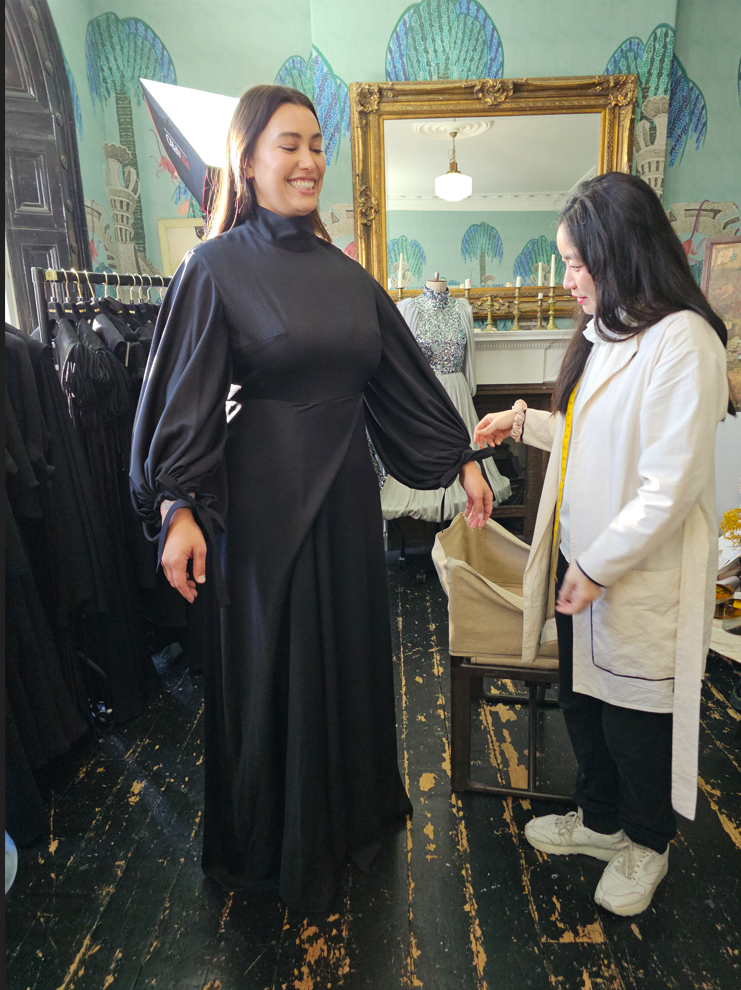
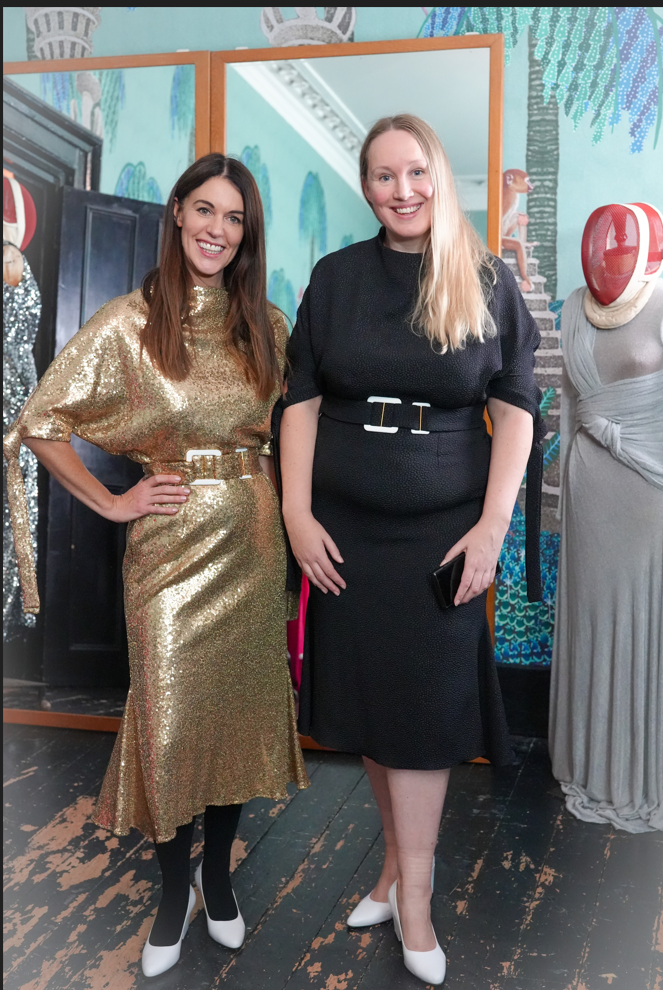
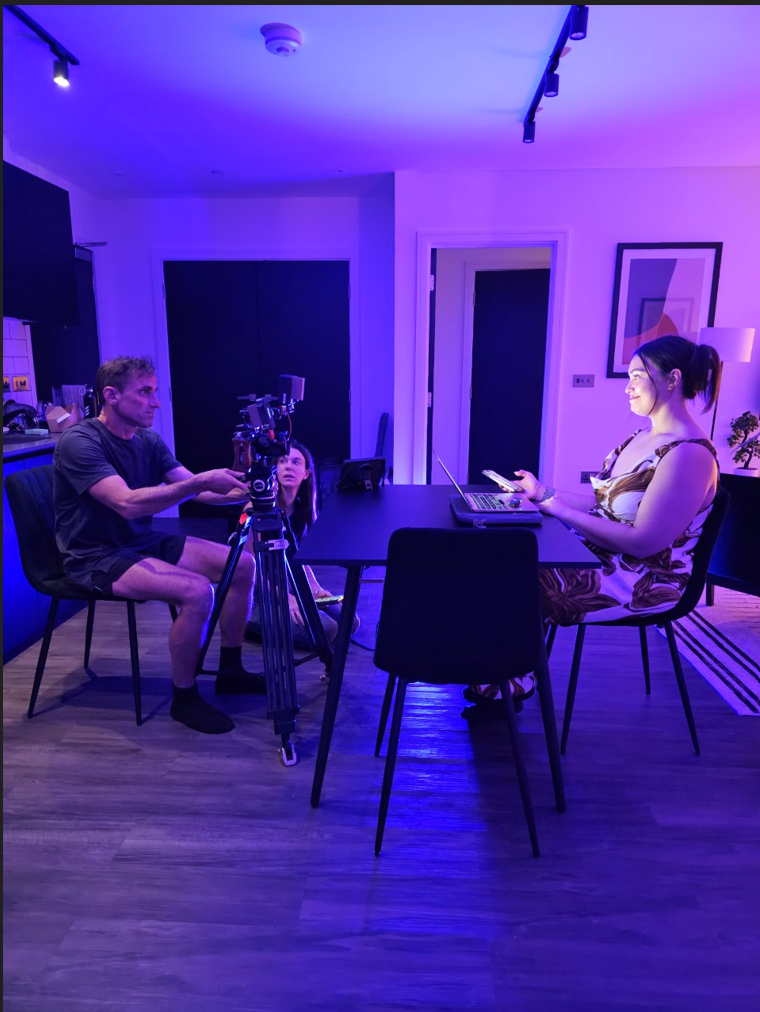
Pictured: Director Julia Parnell along with Evelyn Ebrey.